
Get trending papers in your email inbox once a day!
Get trending papers in your email inbox!
Subscribe

GPA-3D: Geometry-aware Prototype Alignment for Unsupervised Domain Adaptive 3D Object Detection from Point Clouds
LiDAR-based 3D detection has made great progress in recent years. However, the performance of 3D detectors is considerably limited when deployed in unseen environments, owing to the severe domain gap problem. Existing domain adaptive 3D detection methods do not adequately consider the problem of the distributional discrepancy in feature space, thereby hindering generalization of detectors across domains. In this work, we propose a novel unsupervised domain adaptive 3D detection framework, namely Geometry-aware Prototype Alignment (GPA-3D), which explicitly leverages the intrinsic geometric relationship from point cloud objects to reduce the feature discrepancy, thus facilitating cross-domain transferring. Specifically, GPA-3D assigns a series of tailored and learnable prototypes to point cloud objects with distinct geometric structures. Each prototype aligns BEV (bird's-eye-view) features derived from corresponding point cloud objects on source and target domains, reducing the distributional discrepancy and achieving better adaptation. The evaluation results obtained on various benchmarks, including Waymo, nuScenes and KITTI, demonstrate the superiority of our GPA-3D over the state-of-the-art approaches for different adaptation scenarios. The MindSpore version code will be publicly available at https://github.com/Liz66666/GPA3D.
Generalized Few-Shot Point Cloud Segmentation Via Geometric Words
Existing fully-supervised point cloud segmentation methods suffer in the dynamic testing environment with emerging new classes. Few-shot point cloud segmentation algorithms address this problem by learning to adapt to new classes at the sacrifice of segmentation accuracy for the base classes, which severely impedes its practicality. This largely motivates us to present the first attempt at a more practical paradigm of generalized few-shot point cloud segmentation, which requires the model to generalize to new categories with only a few support point clouds and simultaneously retain the capability to segment base classes. We propose the geometric words to represent geometric components shared between the base and novel classes, and incorporate them into a novel geometric-aware semantic representation to facilitate better generalization to the new classes without forgetting the old ones. Moreover, we introduce geometric prototypes to guide the segmentation with geometric prior knowledge. Extensive experiments on S3DIS and ScanNet consistently illustrate the superior performance of our method over baseline methods. Our code is available at: https://github.com/Pixie8888/GFS-3DSeg_GWs.
Robust 3D Object Detection using Probabilistic Point Clouds from Single-Photon LiDARs
LiDAR-based 3D sensors provide point clouds, a canonical 3D representation used in various scene understanding tasks. Modern LiDARs face key challenges in several real-world scenarios, such as long-distance or low-albedo objects, producing sparse or erroneous point clouds. These errors, which are rooted in the noisy raw LiDAR measurements, get propagated to downstream perception models, resulting in potentially severe loss of accuracy. This is because conventional 3D processing pipelines do not retain any uncertainty information from the raw measurements when constructing point clouds. We propose Probabilistic Point Clouds (PPC), a novel 3D scene representation where each point is augmented with a probability attribute that encapsulates the measurement uncertainty (or confidence) in the raw data. We further introduce inference approaches that leverage PPC for robust 3D object detection; these methods are versatile and can be used as computationally lightweight drop-in modules in 3D inference pipelines. We demonstrate, via both simulations and real captures, that PPC-based 3D inference methods outperform several baselines using LiDAR as well as camera-LiDAR fusion models, across challenging indoor and outdoor scenarios involving small, distant, and low-albedo objects, as well as strong ambient light. Our project webpage is at https://bhavyagoyal.github.io/ppc .
Parameter is Not All You Need: Starting from Non-Parametric Networks for 3D Point Cloud Analysis
We present a Non-parametric Network for 3D point cloud analysis, Point-NN, which consists of purely non-learnable components: farthest point sampling (FPS), k-nearest neighbors (k-NN), and pooling operations, with trigonometric functions. Surprisingly, it performs well on various 3D tasks, requiring no parameters or training, and even surpasses existing fully trained models. Starting from this basic non-parametric model, we propose two extensions. First, Point-NN can serve as a base architectural framework to construct Parametric Networks by simply inserting linear layers on top. Given the superior non-parametric foundation, the derived Point-PN exhibits a high performance-efficiency trade-off with only a few learnable parameters. Second, Point-NN can be regarded as a plug-and-play module for the already trained 3D models during inference. Point-NN captures the complementary geometric knowledge and enhances existing methods for different 3D benchmarks without re-training. We hope our work may cast a light on the community for understanding 3D point clouds with non-parametric methods. Code is available at https://github.com/ZrrSkywalker/Point-NN.


PI3DETR: Parametric Instance Detection of 3D Point Cloud Edges with a Geometry-Aware 3DETR
We present PI3DETR, an end-to-end framework that directly predicts 3D parametric curve instances from raw point clouds, avoiding the intermediate representations and multi-stage processing common in prior work. Extending 3DETR, our model introduces a geometry-aware matching strategy and specialized loss functions that enable unified detection of differently parameterized curve types, including cubic B\'ezier curves, line segments, circles, and arcs, in a single forward pass. Optional post-processing steps further refine predictions without adding complexity. This streamlined design improves robustness to noise and varying sampling densities, addressing critical challenges in real world LiDAR and 3D sensing scenarios. PI3DETR sets a new state-of-the-art on the ABC dataset and generalizes effectively to real sensor data, offering a simple yet powerful solution for 3D edge and curve estimation.


Clustering based Point Cloud Representation Learning for 3D Analysis
Point cloud analysis (such as 3D segmentation and detection) is a challenging task, because of not only the irregular geometries of many millions of unordered points, but also the great variations caused by depth, viewpoint, occlusion, etc. Current studies put much focus on the adaption of neural networks to the complex geometries of point clouds, but are blind to a fundamental question: how to learn an appropriate point embedding space that is aware of both discriminative semantics and challenging variations? As a response, we propose a clustering based supervised learning scheme for point cloud analysis. Unlike current de-facto, scene-wise training paradigm, our algorithm conducts within-class clustering on the point embedding space for automatically discovering subclass patterns which are latent yet representative across scenes. The mined patterns are, in turn, used to repaint the embedding space, so as to respect the underlying distribution of the entire training dataset and improve the robustness to the variations. Our algorithm is principled and readily pluggable to modern point cloud segmentation networks during training, without extra overhead during testing. With various 3D network architectures (i.e., voxel-based, point-based, Transformer-based, automatically searched), our algorithm shows notable improvements on famous point cloud segmentation datasets (i.e.,2.0-2.6% on single-scan and 2.0-2.2% multi-scan of SemanticKITTI, 1.8-1.9% on S3DIS, in terms of mIoU). Our algorithm also demonstrates utility in 3D detection, showing 2.0-3.4% mAP gains on KITTI.

Deep Hough Voting for Robust Global Registration
Point cloud registration is the task of estimating the rigid transformation that aligns a pair of point cloud fragments. We present an efficient and robust framework for pairwise registration of real-world 3D scans, leveraging Hough voting in the 6D transformation parameter space. First, deep geometric features are extracted from a point cloud pair to compute putative correspondences. We then construct a set of triplets of correspondences to cast votes on the 6D Hough space, representing the transformation parameters in sparse tensors. Next, a fully convolutional refinement module is applied to refine the noisy votes. Finally, we identify the consensus among the correspondences from the Hough space, which we use to predict our final transformation parameters. Our method outperforms state-of-the-art methods on 3DMatch and 3DLoMatch benchmarks while achieving comparable performance on KITTI odometry dataset. We further demonstrate the generalizability of our approach by setting a new state-of-the-art on ICL-NUIM dataset, where we integrate our module into a multi-way registration pipeline.

Point-GCC: Universal Self-supervised 3D Scene Pre-training via Geometry-Color Contrast
Geometry and color information provided by the point clouds are both crucial for 3D scene understanding. Two pieces of information characterize the different aspects of point clouds, but existing methods lack an elaborate design for the discrimination and relevance. Hence we explore a 3D self-supervised paradigm that can better utilize the relations of point cloud information. Specifically, we propose a universal 3D scene pre-training framework via Geometry-Color Contrast (Point-GCC), which aligns geometry and color information using a Siamese network. To take care of actual application tasks, we design (i) hierarchical supervision with point-level contrast and reconstruct and object-level contrast based on the novel deep clustering module to close the gap between pre-training and downstream tasks; (ii) architecture-agnostic backbone to adapt for various downstream models. Benefiting from the object-level representation associated with downstream tasks, Point-GCC can directly evaluate model performance and the result demonstrates the effectiveness of our methods. Transfer learning results on a wide range of tasks also show consistent improvements across all datasets. e.g., new state-of-the-art object detection results on SUN RGB-D and S3DIS datasets. Codes will be released at https://github.com/Asterisci/Point-GCC.

Linking Points With Labels in 3D: A Review of Point Cloud Semantic Segmentation
3D Point Cloud Semantic Segmentation (PCSS) is attracting increasing interest, due to its applicability in remote sensing, computer vision and robotics, and due to the new possibilities offered by deep learning techniques. In order to provide a needed up-to-date review of recent developments in PCSS, this article summarizes existing studies on this topic. Firstly, we outline the acquisition and evolution of the 3D point cloud from the perspective of remote sensing and computer vision, as well as the published benchmarks for PCSS studies. Then, traditional and advanced techniques used for Point Cloud Segmentation (PCS) and PCSS are reviewed and compared. Finally, important issues and open questions in PCSS studies are discussed.
UniPre3D: Unified Pre-training of 3D Point Cloud Models with Cross-Modal Gaussian Splatting
The scale diversity of point cloud data presents significant challenges in developing unified representation learning techniques for 3D vision. Currently, there are few unified 3D models, and no existing pre-training method is equally effective for both object- and scene-level point clouds. In this paper, we introduce UniPre3D, the first unified pre-training method that can be seamlessly applied to point clouds of any scale and 3D models of any architecture. Our approach predicts Gaussian primitives as the pre-training task and employs differentiable Gaussian splatting to render images, enabling precise pixel-level supervision and end-to-end optimization. To further regulate the complexity of the pre-training task and direct the model's focus toward geometric structures, we integrate 2D features from pre-trained image models to incorporate well-established texture knowledge. We validate the universal effectiveness of our proposed method through extensive experiments across a variety of object- and scene-level tasks, using diverse point cloud models as backbones. Code is available at https://github.com/wangzy22/UniPre3D.


The P^3 dataset: Pixels, Points and Polygons for Multimodal Building Vectorization
We present the P^3 dataset, a large-scale multimodal benchmark for building vectorization, constructed from aerial LiDAR point clouds, high-resolution aerial imagery, and vectorized 2D building outlines, collected across three continents. The dataset contains over 10 billion LiDAR points with decimeter-level accuracy and RGB images at a ground sampling distance of 25 centimeter. While many existing datasets primarily focus on the image modality, P^3 offers a complementary perspective by also incorporating dense 3D information. We demonstrate that LiDAR point clouds serve as a robust modality for predicting building polygons, both in hybrid and end-to-end learning frameworks. Moreover, fusing aerial LiDAR and imagery further improves accuracy and geometric quality of predicted polygons. The P^3 dataset is publicly available, along with code and pretrained weights of three state-of-the-art models for building polygon prediction at https://github.com/raphaelsulzer/PixelsPointsPolygons .
Multi-View Representation is What You Need for Point-Cloud Pre-Training
A promising direction for pre-training 3D point clouds is to leverage the massive amount of data in 2D, whereas the domain gap between 2D and 3D creates a fundamental challenge. This paper proposes a novel approach to point-cloud pre-training that learns 3D representations by leveraging pre-trained 2D networks. Different from the popular practice of predicting 2D features first and then obtaining 3D features through dimensionality lifting, our approach directly uses a 3D network for feature extraction. We train the 3D feature extraction network with the help of the novel 2D knowledge transfer loss, which enforces the 2D projections of the 3D feature to be consistent with the output of pre-trained 2D networks. To prevent the feature from discarding 3D signals, we introduce the multi-view consistency loss that additionally encourages the projected 2D feature representations to capture pixel-wise correspondences across different views. Such correspondences induce 3D geometry and effectively retain 3D features in the projected 2D features. Experimental results demonstrate that our pre-trained model can be successfully transferred to various downstream tasks, including 3D shape classification, part segmentation, 3D object detection, and semantic segmentation, achieving state-of-the-art performance.

Benchmarking and Analyzing Point Cloud Classification under Corruptions
3D perception, especially point cloud classification, has achieved substantial progress. However, in real-world deployment, point cloud corruptions are inevitable due to the scene complexity, sensor inaccuracy, and processing imprecision. In this work, we aim to rigorously benchmark and analyze point cloud classification under corruptions. To conduct a systematic investigation, we first provide a taxonomy of common 3D corruptions and identify the atomic corruptions. Then, we perform a comprehensive evaluation on a wide range of representative point cloud models to understand their robustness and generalizability. Our benchmark results show that although point cloud classification performance improves over time, the state-of-the-art methods are on the verge of being less robust. Based on the obtained observations, we propose several effective techniques to enhance point cloud classifier robustness. We hope our comprehensive benchmark, in-depth analysis, and proposed techniques could spark future research in robust 3D perception.

Point2Point : A Framework for Efficient Deep Learning on Hilbert sorted Point Clouds with applications in Spatio-Temporal Occupancy Prediction
The irregularity and permutation invariance of point cloud data pose challenges for effective learning. Conventional methods for addressing this issue involve converting raw point clouds to intermediate representations such as 3D voxel grids or range images. While such intermediate representations solve the problem of permutation invariance, they can result in significant loss of information. Approaches that do learn on raw point clouds either have trouble in resolving neighborhood relationships between points or are too complicated in their formulation. In this paper, we propose a novel approach to representing point clouds as a locality preserving 1D ordering induced by the Hilbert space-filling curve. We also introduce Point2Point, a neural architecture that can effectively learn on Hilbert-sorted point clouds. We show that Point2Point shows competitive performance on point cloud segmentation and generation tasks. Finally, we show the performance of Point2Point on Spatio-temporal Occupancy prediction from Point clouds.
Point-Cache: Test-time Dynamic and Hierarchical Cache for Robust and Generalizable Point Cloud Analysis
This paper proposes a general solution to enable point cloud recognition models to handle distribution shifts at test time. Unlike prior methods, which rely heavily on training data (often inaccessible during online inference) and are limited to recognizing a fixed set of point cloud classes predefined during training, we explore a more practical and challenging scenario: adapting the model solely based on online test data to recognize both previously seen classes and novel, unseen classes at test time. To this end, we develop Point-Cache, a hierarchical cache model that captures essential clues of online test samples, particularly focusing on the global structure of point clouds and their local-part details. Point-Cache, which serves as a rich 3D knowledge base, is dynamically managed to prioritize the inclusion of high-quality samples. Designed as a plug-and-play module, our method can be flexibly integrated into large multimodal 3D models to support open-vocabulary point cloud recognition. Notably, our solution operates with efficiency comparable to zero-shot inference, as it is entirely training-free. Point-Cache demonstrates substantial gains across 8 challenging benchmarks and 4 representative large 3D models, highlighting its effectiveness. Code is available at https://github.com/auniquesun/Point-Cache.

Sonata: Self-Supervised Learning of Reliable Point Representations
In this paper, we question whether we have a reliable self-supervised point cloud model that can be used for diverse 3D tasks via simple linear probing, even with limited data and minimal computation. We find that existing 3D self-supervised learning approaches fall short when evaluated on representation quality through linear probing. We hypothesize that this is due to what we term the "geometric shortcut", which causes representations to collapse to low-level spatial features. This challenge is unique to 3D and arises from the sparse nature of point cloud data. We address it through two key strategies: obscuring spatial information and enhancing the reliance on input features, ultimately composing a Sonata of 140k point clouds through self-distillation. Sonata is simple and intuitive, yet its learned representations are strong and reliable: zero-shot visualizations demonstrate semantic grouping, alongside strong spatial reasoning through nearest-neighbor relationships. Sonata demonstrates exceptional parameter and data efficiency, tripling linear probing accuracy (from 21.8% to 72.5%) on ScanNet and nearly doubling performance with only 1% of the data compared to previous approaches. Full fine-tuning further advances SOTA across both 3D indoor and outdoor perception tasks.

GaPro: Box-Supervised 3D Point Cloud Instance Segmentation Using Gaussian Processes as Pseudo Labelers
Instance segmentation on 3D point clouds (3DIS) is a longstanding challenge in computer vision, where state-of-the-art methods are mainly based on full supervision. As annotating ground truth dense instance masks is tedious and expensive, solving 3DIS with weak supervision has become more practical. In this paper, we propose GaPro, a new instance segmentation for 3D point clouds using axis-aligned 3D bounding box supervision. Our two-step approach involves generating pseudo labels from box annotations and training a 3DIS network with the resulting labels. Additionally, we employ the self-training strategy to improve the performance of our method further. We devise an effective Gaussian Process to generate pseudo instance masks from the bounding boxes and resolve ambiguities when they overlap, resulting in pseudo instance masks with their uncertainty values. Our experiments show that GaPro outperforms previous weakly supervised 3D instance segmentation methods and has competitive performance compared to state-of-the-art fully supervised ones. Furthermore, we demonstrate the robustness of our approach, where we can adapt various state-of-the-art fully supervised methods to the weak supervision task by using our pseudo labels for training. The source code and trained models are available at https://github.com/VinAIResearch/GaPro.

EdgeGaussians -- 3D Edge Mapping via Gaussian Splatting
With their meaningful geometry and their omnipresence in the 3D world, edges are extremely useful primitives in computer vision. 3D edges comprise of lines and curves, and methods to reconstruct them use either multi-view images or point clouds as input. State-of-the-art image-based methods first learn a 3D edge point cloud then fit 3D edges to it. The edge point cloud is obtained by learning a 3D neural implicit edge field from which the 3D edge points are sampled on a specific level set (0 or 1). However, such methods present two important drawbacks: i) it is not realistic to sample points on exact level sets due to float imprecision and training inaccuracies. Instead, they are sampled within a range of levels so the points do not lie accurately on the 3D edges and require further processing. ii) Such implicit representations are computationally expensive and require long training times. In this paper, we address these two limitations and propose a 3D edge mapping that is simpler, more efficient, and preserves accuracy. Our method learns explicitly the 3D edge points and their edge direction hence bypassing the need for point sampling. It casts a 3D edge point as the center of a 3D Gaussian and the edge direction as the principal axis of the Gaussian. Such a representation has the advantage of being not only geometrically meaningful but also compatible with the efficient training optimization defined in Gaussian Splatting. Results show that the proposed method produces edges as accurate and complete as the state-of-the-art while being an order of magnitude faster. Code is released at https://github.com/kunalchelani/EdgeGaussians.

Point Cloud Mamba: Point Cloud Learning via State Space Model
Recently, state space models have exhibited strong global modeling capabilities and linear computational complexity in contrast to transformers. This research focuses on applying such architecture to more efficiently and effectively model point cloud data globally with linear computational complexity. In particular, for the first time, we demonstrate that Mamba-based point cloud methods can outperform previous methods based on transformer or multi-layer perceptrons (MLPs). To enable Mamba to process 3-D point cloud data more effectively, we propose a novel Consistent Traverse Serialization method to convert point clouds into 1-D point sequences while ensuring that neighboring points in the sequence are also spatially adjacent. Consistent Traverse Serialization yields six variants by permuting the order of x, y, and z coordinates, and the synergistic use of these variants aids Mamba in comprehensively observing point cloud data. Furthermore, to assist Mamba in handling point sequences with different orders more effectively, we introduce point prompts to inform Mamba of the sequence's arrangement rules. Finally, we propose positional encoding based on spatial coordinate mapping to inject positional information into point cloud sequences more effectively. Point Cloud Mamba surpasses the state-of-the-art (SOTA) point-based method PointNeXt and achieves new SOTA performance on the ScanObjectNN, ModelNet40, ShapeNetPart, and S3DIS datasets. It is worth mentioning that when using a more powerful local feature extraction module, our PCM achieves 79.6 mIoU on S3DIS, significantly surpassing the previous SOTA models, DeLA and PTv3, by 5.5 mIoU and 4.9 mIoU, respectively.


SC3K: Self-supervised and Coherent 3D Keypoints Estimation from Rotated, Noisy, and Decimated Point Cloud Data
This paper proposes a new method to infer keypoints from arbitrary object categories in practical scenarios where point cloud data (PCD) are noisy, down-sampled and arbitrarily rotated. Our proposed model adheres to the following principles: i) keypoints inference is fully unsupervised (no annotation given), ii) keypoints position error should be low and resilient to PCD perturbations (robustness), iii) keypoints should not change their indexes for the intra-class objects (semantic coherence), iv) keypoints should be close to or proximal to PCD surface (compactness). We achieve these desiderata by proposing a new self-supervised training strategy for keypoints estimation that does not assume any a priori knowledge of the object class, and a model architecture with coupled auxiliary losses that promotes the desired keypoints properties. We compare the keypoints estimated by the proposed approach with those of the state-of-the-art unsupervised approaches. The experiments show that our approach outperforms by estimating keypoints with improved coverage (+9.41%) while being semantically consistent (+4.66%) that best characterizes the object's 3D shape for downstream tasks. Code and data are available at: https://github.com/IITPAVIS/SC3K
Point-Plane Projections for Accurate LiDAR Semantic Segmentation in Small Data Scenarios
LiDAR point cloud semantic segmentation is essential for interpreting 3D environments in applications such as autonomous driving and robotics. Recent methods achieve strong performance by exploiting different point cloud representations or incorporating data from other sensors, such as cameras or external datasets. However, these approaches often suffer from high computational complexity and require large amounts of training data, limiting their generalization in data-scarce scenarios. In this paper, we improve the performance of point-based methods by effectively learning features from 2D representations through point-plane projections, enabling the extraction of complementary information while relying solely on LiDAR data. Additionally, we introduce a geometry-aware technique for data augmentation that aligns with LiDAR sensor properties and mitigates class imbalance. We implemented and evaluated our method that applies point-plane projections onto multiple informative 2D representations of the point cloud. Experiments demonstrate that this approach leads to significant improvements in limited-data scenarios, while also achieving competitive results on two publicly available standard datasets, as SemanticKITTI and PandaSet. The code of our method is available at https://github.com/SiMoM0/3PNet

Enhancing Sampling Protocol for Point Cloud Classification Against Corruptions
Established sampling protocols for 3D point cloud learning, such as Farthest Point Sampling (FPS) and Fixed Sample Size (FSS), have long been relied upon. However, real-world data often suffer from corruptions, such as sensor noise, which violates the benign data assumption in current protocols. As a result, these protocols are highly vulnerable to noise, posing significant safety risks in critical applications like autonomous driving. To address these issues, we propose an enhanced point cloud sampling protocol, PointSP, designed to improve robustness against point cloud corruptions. PointSP incorporates key point reweighting to mitigate outlier sensitivity and ensure the selection of representative points. It also introduces a local-global balanced downsampling strategy, which allows for scalable and adaptive sampling while maintaining geometric consistency. Additionally, a lightweight tangent plane interpolation method is used to preserve local geometry while enhancing the density of the point cloud. Unlike learning-based approaches that require additional model training, PointSP is architecture-agnostic, requiring no extra learning or modification to the network. This enables seamless integration into existing pipelines. Extensive experiments on synthetic and real-world corrupted datasets show that PointSP significantly improves the robustness and accuracy of point cloud classification, outperforming state-of-the-art methods across multiple benchmarks.

PointNet++: Deep Hierarchical Feature Learning on Point Sets in a Metric Space
Few prior works study deep learning on point sets. PointNet by Qi et al. is a pioneer in this direction. However, by design PointNet does not capture local structures induced by the metric space points live in, limiting its ability to recognize fine-grained patterns and generalizability to complex scenes. In this work, we introduce a hierarchical neural network that applies PointNet recursively on a nested partitioning of the input point set. By exploiting metric space distances, our network is able to learn local features with increasing contextual scales. With further observation that point sets are usually sampled with varying densities, which results in greatly decreased performance for networks trained on uniform densities, we propose novel set learning layers to adaptively combine features from multiple scales. Experiments show that our network called PointNet++ is able to learn deep point set features efficiently and robustly. In particular, results significantly better than state-of-the-art have been obtained on challenging benchmarks of 3D point clouds.
LAM3D: Large Image-Point-Cloud Alignment Model for 3D Reconstruction from Single Image
Large Reconstruction Models have made significant strides in the realm of automated 3D content generation from single or multiple input images. Despite their success, these models often produce 3D meshes with geometric inaccuracies, stemming from the inherent challenges of deducing 3D shapes solely from image data. In this work, we introduce a novel framework, the Large Image and Point Cloud Alignment Model (LAM3D), which utilizes 3D point cloud data to enhance the fidelity of generated 3D meshes. Our methodology begins with the development of a point-cloud-based network that effectively generates precise and meaningful latent tri-planes, laying the groundwork for accurate 3D mesh reconstruction. Building upon this, our Image-Point-Cloud Feature Alignment technique processes a single input image, aligning to the latent tri-planes to imbue image features with robust 3D information. This process not only enriches the image features but also facilitates the production of high-fidelity 3D meshes without the need for multi-view input, significantly reducing geometric distortions. Our approach achieves state-of-the-art high-fidelity 3D mesh reconstruction from a single image in just 6 seconds, and experiments on various datasets demonstrate its effectiveness.


DreamScene360: Unconstrained Text-to-3D Scene Generation with Panoramic Gaussian Splatting
The increasing demand for virtual reality applications has highlighted the significance of crafting immersive 3D assets. We present a text-to-3D 360^{circ} scene generation pipeline that facilitates the creation of comprehensive 360^{circ} scenes for in-the-wild environments in a matter of minutes. Our approach utilizes the generative power of a 2D diffusion model and prompt self-refinement to create a high-quality and globally coherent panoramic image. This image acts as a preliminary "flat" (2D) scene representation. Subsequently, it is lifted into 3D Gaussians, employing splatting techniques to enable real-time exploration. To produce consistent 3D geometry, our pipeline constructs a spatially coherent structure by aligning the 2D monocular depth into a globally optimized point cloud. This point cloud serves as the initial state for the centroids of 3D Gaussians. In order to address invisible issues inherent in single-view inputs, we impose semantic and geometric constraints on both synthesized and input camera views as regularizations. These guide the optimization of Gaussians, aiding in the reconstruction of unseen regions. In summary, our method offers a globally consistent 3D scene within a 360^{circ} perspective, providing an enhanced immersive experience over existing techniques. Project website at: http://dreamscene360.github.io/




Self-Ordering Point Clouds
In this paper we address the task of finding representative subsets of points in a 3D point cloud by means of a point-wise ordering. Only a few works have tried to address this challenging vision problem, all with the help of hard to obtain point and cloud labels. Different from these works, we introduce the task of point-wise ordering in 3D point clouds through self-supervision, which we call self-ordering. We further contribute the first end-to-end trainable network that learns a point-wise ordering in a self-supervised fashion. It utilizes a novel differentiable point scoring-sorting strategy and it constructs an hierarchical contrastive scheme to obtain self-supervision signals. We extensively ablate the method and show its scalability and superior performance even compared to supervised ordering methods on multiple datasets and tasks including zero-shot ordering of point clouds from unseen categories.

Rethinking Network Design and Local Geometry in Point Cloud: A Simple Residual MLP Framework
Point cloud analysis is challenging due to irregularity and unordered data structure. To capture the 3D geometries, prior works mainly rely on exploring sophisticated local geometric extractors using convolution, graph, or attention mechanisms. These methods, however, incur unfavorable latency during inference, and the performance saturates over the past few years. In this paper, we present a novel perspective on this task. We notice that detailed local geometrical information probably is not the key to point cloud analysis -- we introduce a pure residual MLP network, called PointMLP, which integrates no sophisticated local geometrical extractors but still performs very competitively. Equipped with a proposed lightweight geometric affine module, PointMLP delivers the new state-of-the-art on multiple datasets. On the real-world ScanObjectNN dataset, our method even surpasses the prior best method by 3.3% accuracy. We emphasize that PointMLP achieves this strong performance without any sophisticated operations, hence leading to a superior inference speed. Compared to most recent CurveNet, PointMLP trains 2x faster, tests 7x faster, and is more accurate on ModelNet40 benchmark. We hope our PointMLP may help the community towards a better understanding of point cloud analysis. The code is available at https://github.com/ma-xu/pointMLP-pytorch.

G3Reg: Pyramid Graph-based Global Registration using Gaussian Ellipsoid Model
This study introduces a novel framework, G3Reg, for fast and robust global registration of LiDAR point clouds. In contrast to conventional complex keypoints and descriptors, we extract fundamental geometric primitives, including planes, clusters, and lines (PCL) from the raw point cloud to obtain low-level semantic segments. Each segment is represented as a unified Gaussian Ellipsoid Model (GEM), using a probability ellipsoid to ensure the ground truth centers are encompassed with a certain degree of probability. Utilizing these GEMs, we present a distrust-and-verify scheme based on a Pyramid Compatibility Graph for Global Registration (PAGOR). Specifically, we establish an upper bound, which can be traversed based on the confidence level for compatibility testing to construct the pyramid graph. Then, we solve multiple maximum cliques (MAC) for each level of the pyramid graph, thus generating the corresponding transformation candidates. In the verification phase, we adopt a precise and efficient metric for point cloud alignment quality, founded on geometric primitives, to identify the optimal candidate. The algorithm's performance is validated on three publicly available datasets and a self-collected multi-session dataset. Parameter settings remained unchanged during the experiment evaluations. The results exhibit superior robustness and real-time performance of the G3Reg framework compared to state-of-the-art methods. Furthermore, we demonstrate the potential for integrating individual GEM and PAGOR components into other registration frameworks to enhance their efficacy. Code: https://github.com/HKUST-Aerial-Robotics/G3Reg
Point-MoE: Towards Cross-Domain Generalization in 3D Semantic Segmentation via Mixture-of-Experts
While scaling laws have transformed natural language processing and computer vision, 3D point cloud understanding has yet to reach that stage. This can be attributed to both the comparatively smaller scale of 3D datasets, as well as the disparate sources of the data itself. Point clouds are captured by diverse sensors (e.g., depth cameras, LiDAR) across varied domains (e.g., indoor, outdoor), each introducing unique scanning patterns, sampling densities, and semantic biases. Such domain heterogeneity poses a major barrier towards training unified models at scale, especially under the realistic constraint that domain labels are typically inaccessible at inference time. In this work, we propose Point-MoE, a Mixture-of-Experts architecture designed to enable large-scale, cross-domain generalization in 3D perception. We show that standard point cloud backbones degrade significantly in performance when trained on mixed-domain data, whereas Point-MoE with a simple top-k routing strategy can automatically specialize experts, even without access to domain labels. Our experiments demonstrate that Point-MoE not only outperforms strong multi-domain baselines but also generalizes better to unseen domains. This work highlights a scalable path forward for 3D understanding: letting the model discover structure in diverse 3D data, rather than imposing it via manual curation or domain supervision.
PointMBF: A Multi-scale Bidirectional Fusion Network for Unsupervised RGB-D Point Cloud Registration
Point cloud registration is a task to estimate the rigid transformation between two unaligned scans, which plays an important role in many computer vision applications. Previous learning-based works commonly focus on supervised registration, which have limitations in practice. Recently, with the advance of inexpensive RGB-D sensors, several learning-based works utilize RGB-D data to achieve unsupervised registration. However, most of existing unsupervised methods follow a cascaded design or fuse RGB-D data in a unidirectional manner, which do not fully exploit the complementary information in the RGB-D data. To leverage the complementary information more effectively, we propose a network implementing multi-scale bidirectional fusion between RGB images and point clouds generated from depth images. By bidirectionally fusing visual and geometric features in multi-scales, more distinctive deep features for correspondence estimation can be obtained, making our registration more accurate. Extensive experiments on ScanNet and 3DMatch demonstrate that our method achieves new state-of-the-art performance. Code will be released at https://github.com/phdymz/PointMBF
Sparse Point Cloud Patches Rendering via Splitting 2D Gaussians
Current learning-based methods predict NeRF or 3D Gaussians from point clouds to achieve photo-realistic rendering but still depend on categorical priors, dense point clouds, or additional refinements. Hence, we introduce a novel point cloud rendering method by predicting 2D Gaussians from point clouds. Our method incorporates two identical modules with an entire-patch architecture enabling the network to be generalized to multiple datasets. The module normalizes and initializes the Gaussians utilizing the point cloud information including normals, colors and distances. Then, splitting decoders are employed to refine the initial Gaussians by duplicating them and predicting more accurate results, making our methodology effectively accommodate sparse point clouds as well. Once trained, our approach exhibits direct generalization to point clouds across different categories. The predicted Gaussians are employed directly for rendering without additional refinement on the rendered images, retaining the benefits of 2D Gaussians. We conduct extensive experiments on various datasets, and the results demonstrate the superiority and generalization of our method, which achieves SOTA performance. The code is available at https://github.com/murcherful/GauPCRender}{https://github.com/murcherful/GauPCRender.

P2P: Tuning Pre-trained Image Models for Point Cloud Analysis with Point-to-Pixel Prompting
Nowadays, pre-training big models on large-scale datasets has become a crucial topic in deep learning. The pre-trained models with high representation ability and transferability achieve a great success and dominate many downstream tasks in natural language processing and 2D vision. However, it is non-trivial to promote such a pretraining-tuning paradigm to the 3D vision, given the limited training data that are relatively inconvenient to collect. In this paper, we provide a new perspective of leveraging pre-trained 2D knowledge in 3D domain to tackle this problem, tuning pre-trained image models with the novel Point-to-Pixel prompting for point cloud analysis at a minor parameter cost. Following the principle of prompting engineering, we transform point clouds into colorful images with geometry-preserved projection and geometry-aware coloring to adapt to pre-trained image models, whose weights are kept frozen during the end-to-end optimization of point cloud analysis tasks. We conduct extensive experiments to demonstrate that cooperating with our proposed Point-to-Pixel Prompting, better pre-trained image model will lead to consistently better performance in 3D vision. Enjoying prosperous development from image pre-training field, our method attains 89.3% accuracy on the hardest setting of ScanObjectNN, surpassing conventional point cloud models with much fewer trainable parameters. Our framework also exhibits very competitive performance on ModelNet classification and ShapeNet Part Segmentation. Code is available at https://github.com/wangzy22/P2P.

Through the Perspective of LiDAR: A Feature-Enriched and Uncertainty-Aware Annotation Pipeline for Terrestrial Point Cloud Segmentation
Accurate semantic segmentation of terrestrial laser scanning (TLS) point clouds is limited by costly manual annotation. We propose a semi-automated, uncertainty-aware pipeline that integrates spherical projection, feature enrichment, ensemble learning, and targeted annotation to reduce labeling effort, while sustaining high accuracy. Our approach projects 3D points to a 2D spherical grid, enriches pixels with multi-source features, and trains an ensemble of segmentation networks to produce pseudo-labels and uncertainty maps, the latter guiding annotation of ambiguous regions. The 2D outputs are back-projected to 3D, yielding densely annotated point clouds supported by a three-tier visualization suite (2D feature maps, 3D colorized point clouds, and compact virtual spheres) for rapid triage and reviewer guidance. Using this pipeline, we build Mangrove3D, a semantic segmentation TLS dataset for mangrove forests. We further evaluate data efficiency and feature importance to address two key questions: (1) how much annotated data are needed and (2) which features matter most. Results show that performance saturates after ~12 annotated scans, geometric features contribute the most, and compact nine-channel stacks capture nearly all discriminative power, with the mean Intersection over Union (mIoU) plateauing at around 0.76. Finally, we confirm the generalization of our feature-enrichment strategy through cross-dataset tests on ForestSemantic and Semantic3D. Our contributions include: (i) a robust, uncertainty-aware TLS annotation pipeline with visualization tools; (ii) the Mangrove3D dataset; and (iii) empirical guidance on data efficiency and feature importance, thus enabling scalable, high-quality segmentation of TLS point clouds for ecological monitoring and beyond. The dataset and processing scripts are publicly available at https://fz-rit.github.io/through-the-lidars-eye/.

Metric3D: Towards Zero-shot Metric 3D Prediction from A Single Image
Reconstructing accurate 3D scenes from images is a long-standing vision task. Due to the ill-posedness of the single-image reconstruction problem, most well-established methods are built upon multi-view geometry. State-of-the-art (SOTA) monocular metric depth estimation methods can only handle a single camera model and are unable to perform mixed-data training due to the metric ambiguity. Meanwhile, SOTA monocular methods trained on large mixed datasets achieve zero-shot generalization by learning affine-invariant depths, which cannot recover real-world metrics. In this work, we show that the key to a zero-shot single-view metric depth model lies in the combination of large-scale data training and resolving the metric ambiguity from various camera models. We propose a canonical camera space transformation module, which explicitly addresses the ambiguity problems and can be effortlessly plugged into existing monocular models. Equipped with our module, monocular models can be stably trained with over 8 million images with thousands of camera models, resulting in zero-shot generalization to in-the-wild images with unseen camera settings. Experiments demonstrate SOTA performance of our method on 7 zero-shot benchmarks. Notably, our method won the championship in the 2nd Monocular Depth Estimation Challenge. Our method enables the accurate recovery of metric 3D structures on randomly collected internet images, paving the way for plausible single-image metrology. The potential benefits extend to downstream tasks, which can be significantly improved by simply plugging in our model. For example, our model relieves the scale drift issues of monocular-SLAM (Fig. 1), leading to high-quality metric scale dense mapping. The code is available at https://github.com/YvanYin/Metric3D.


Unposed 3DGS Reconstruction with Probabilistic Procrustes Mapping
3D Gaussian Splatting (3DGS) has emerged as a core technique for 3D representation. Its effectiveness largely depends on precise camera poses and accurate point cloud initialization, which are often derived from pretrained Multi-View Stereo (MVS) models. However, in unposed reconstruction task from hundreds of outdoor images, existing MVS models may struggle with memory limits and lose accuracy as the number of input images grows. To address this limitation, we propose a novel unposed 3DGS reconstruction framework that integrates pretrained MVS priors with the probabilistic Procrustes mapping strategy. The method partitions input images into subsets, maps submaps into a global space, and jointly optimizes geometry and poses with 3DGS. Technically, we formulate the mapping of tens of millions of point clouds as a probabilistic Procrustes problem and solve a closed-form alignment. By employing probabilistic coupling along with a soft dustbin mechanism to reject uncertain correspondences, our method globally aligns point clouds and poses within minutes across hundreds of images. Moreover, we propose a joint optimization framework for 3DGS and camera poses. It constructs Gaussians from confidence-aware anchor points and integrates 3DGS differentiable rendering with an analytical Jacobian to jointly refine scene and poses, enabling accurate reconstruction and pose estimation. Experiments on Waymo and KITTI datasets show that our method achieves accurate reconstruction from unposed image sequences, setting a new state of the art for unposed 3DGS reconstruction.
Diffusion Probabilistic Models for 3D Point Cloud Generation
We present a probabilistic model for point cloud generation, which is fundamental for various 3D vision tasks such as shape completion, upsampling, synthesis and data augmentation. Inspired by the diffusion process in non-equilibrium thermodynamics, we view points in point clouds as particles in a thermodynamic system in contact with a heat bath, which diffuse from the original distribution to a noise distribution. Point cloud generation thus amounts to learning the reverse diffusion process that transforms the noise distribution to the distribution of a desired shape. Specifically, we propose to model the reverse diffusion process for point clouds as a Markov chain conditioned on certain shape latent. We derive the variational bound in closed form for training and provide implementations of the model. Experimental results demonstrate that our model achieves competitive performance in point cloud generation and auto-encoding. The code is available at https://github.com/luost26/diffusion-point-cloud.
LidarScout: Direct Out-of-Core Rendering of Massive Point Clouds
Large-scale terrain scans are the basis for many important tasks, such as topographic mapping, forestry, agriculture, and infrastructure planning. The resulting point cloud data sets are so massive in size that even basic tasks like viewing take hours to days of pre-processing in order to create level-of-detail structures that allow inspecting the data set in their entirety in real time. In this paper, we propose a method that is capable of instantly visualizing massive country-sized scans with hundreds of billions of points. Upon opening the data set, we first load a sparse subsample of points and initialize an overview of the entire point cloud, immediately followed by a surface reconstruction process to generate higher-quality, hole-free heightmaps. As users start navigating towards a region of interest, we continue to prioritize the heightmap construction process to the user's viewpoint. Once a user zooms in closely, we load the full-resolution point cloud data for that region and update the corresponding height map textures with the full-resolution data. As users navigate elsewhere, full-resolution point data that is no longer needed is unloaded, but the updated heightmap textures are retained as a form of medium level of detail. Overall, our method constitutes a form of direct out-of-core rendering for massive point cloud data sets (terabytes, compressed) that requires no preprocessing and no additional disk space. Source code, executable, pre-trained model, and dataset are available at: https://github.com/cg-tuwien/lidarscout
Point2Vec for Self-Supervised Representation Learning on Point Clouds
Recently, the self-supervised learning framework data2vec has shown inspiring performance for various modalities using a masked student-teacher approach. However, it remains open whether such a framework generalizes to the unique challenges of 3D point clouds. To answer this question, we extend data2vec to the point cloud domain and report encouraging results on several downstream tasks. In an in-depth analysis, we discover that the leakage of positional information reveals the overall object shape to the student even under heavy masking and thus hampers data2vec to learn strong representations for point clouds. We address this 3D-specific shortcoming by proposing point2vec, which unleashes the full potential of data2vec-like pre-training on point clouds. Our experiments show that point2vec outperforms other self-supervised methods on shape classification and few-shot learning on ModelNet40 and ScanObjectNN, while achieving competitive results on part segmentation on ShapeNetParts. These results suggest that the learned representations are strong and transferable, highlighting point2vec as a promising direction for self-supervised learning of point cloud representations.

UniDepth: Universal Monocular Metric Depth Estimation
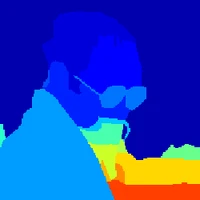
Accurate monocular metric depth estimation (MMDE) is crucial to solving downstream tasks in 3D perception and modeling. However, the remarkable accuracy of recent MMDE methods is confined to their training domains. These methods fail to generalize to unseen domains even in the presence of moderate domain gaps, which hinders their practical applicability. We propose a new model, UniDepth, capable of reconstructing metric 3D scenes from solely single images across domains. Departing from the existing MMDE methods, UniDepth directly predicts metric 3D points from the input image at inference time without any additional information, striving for a universal and flexible MMDE solution. In particular, UniDepth implements a self-promptable camera module predicting dense camera representation to condition depth features. Our model exploits a pseudo-spherical output representation, which disentangles camera and depth representations. In addition, we propose a geometric invariance loss that promotes the invariance of camera-prompted depth features. Thorough evaluations on ten datasets in a zero-shot regime consistently demonstrate the superior performance of UniDepth, even when compared with methods directly trained on the testing domains. Code and models are available at: https://github.com/lpiccinelli-eth/unidepth


Continuous 3D Perception Model with Persistent State
We present a unified framework capable of solving a broad range of 3D tasks. Our approach features a stateful recurrent model that continuously updates its state representation with each new observation. Given a stream of images, this evolving state can be used to generate metric-scale pointmaps (per-pixel 3D points) for each new input in an online fashion. These pointmaps reside within a common coordinate system, and can be accumulated into a coherent, dense scene reconstruction that updates as new images arrive. Our model, called CUT3R (Continuous Updating Transformer for 3D Reconstruction), captures rich priors of real-world scenes: not only can it predict accurate pointmaps from image observations, but it can also infer unseen regions of the scene by probing at virtual, unobserved views. Our method is simple yet highly flexible, naturally accepting varying lengths of images that may be either video streams or unordered photo collections, containing both static and dynamic content. We evaluate our method on various 3D/4D tasks and demonstrate competitive or state-of-the-art performance in each. Project Page: https://cut3r.github.io/
Generalized Few-shot 3D Point Cloud Segmentation with Vision-Language Model
Generalized few-shot 3D point cloud segmentation (GFS-PCS) adapts models to new classes with few support samples while retaining base class segmentation. Existing GFS-PCS methods enhance prototypes via interacting with support or query features but remain limited by sparse knowledge from few-shot samples. Meanwhile, 3D vision-language models (3D VLMs), generalizing across open-world novel classes, contain rich but noisy novel class knowledge. In this work, we introduce a GFS-PCS framework that synergizes dense but noisy pseudo-labels from 3D VLMs with precise yet sparse few-shot samples to maximize the strengths of both, named GFS-VL. Specifically, we present a prototype-guided pseudo-label selection to filter low-quality regions, followed by an adaptive infilling strategy that combines knowledge from pseudo-label contexts and few-shot samples to adaptively label the filtered, unlabeled areas. Additionally, we design a novel-base mix strategy to embed few-shot samples into training scenes, preserving essential context for improved novel class learning. Moreover, recognizing the limited diversity in current GFS-PCS benchmarks, we introduce two challenging benchmarks with diverse novel classes for comprehensive generalization evaluation. Experiments validate the effectiveness of our framework across models and datasets. Our approach and benchmarks provide a solid foundation for advancing GFS-PCS in the real world. The code is at https://github.com/ZhaochongAn/GFS-VL




Center-based 3D Object Detection and Tracking
Three-dimensional objects are commonly represented as 3D boxes in a point-cloud. This representation mimics the well-studied image-based 2D bounding-box detection but comes with additional challenges. Objects in a 3D world do not follow any particular orientation, and box-based detectors have difficulties enumerating all orientations or fitting an axis-aligned bounding box to rotated objects. In this paper, we instead propose to represent, detect, and track 3D objects as points. Our framework, CenterPoint, first detects centers of objects using a keypoint detector and regresses to other attributes, including 3D size, 3D orientation, and velocity. In a second stage, it refines these estimates using additional point features on the object. In CenterPoint, 3D object tracking simplifies to greedy closest-point matching. The resulting detection and tracking algorithm is simple, efficient, and effective. CenterPoint achieved state-of-the-art performance on the nuScenes benchmark for both 3D detection and tracking, with 65.5 NDS and 63.8 AMOTA for a single model. On the Waymo Open Dataset, CenterPoint outperforms all previous single model method by a large margin and ranks first among all Lidar-only submissions. The code and pretrained models are available at https://github.com/tianweiy/CenterPoint.
STPLS3D: A Large-Scale Synthetic and Real Aerial Photogrammetry 3D Point Cloud Dataset
Although various 3D datasets with different functions and scales have been proposed recently, it remains challenging for individuals to complete the whole pipeline of large-scale data collection, sanitization, and annotation. Moreover, the created datasets usually suffer from extremely imbalanced class distribution or partial low-quality data samples. Motivated by this, we explore the procedurally synthetic 3D data generation paradigm to equip individuals with the full capability of creating large-scale annotated photogrammetry point clouds. Specifically, we introduce a synthetic aerial photogrammetry point clouds generation pipeline that takes full advantage of open geospatial data sources and off-the-shelf commercial packages. Unlike generating synthetic data in virtual games, where the simulated data usually have limited gaming environments created by artists, the proposed pipeline simulates the reconstruction process of the real environment by following the same UAV flight pattern on different synthetic terrain shapes and building densities, which ensure similar quality, noise pattern, and diversity with real data. In addition, the precise semantic and instance annotations can be generated fully automatically, avoiding the expensive and time-consuming manual annotation. Based on the proposed pipeline, we present a richly-annotated synthetic 3D aerial photogrammetry point cloud dataset, termed STPLS3D, with more than 16 km^2 of landscapes and up to 18 fine-grained semantic categories. For verification purposes, we also provide a parallel dataset collected from four areas in the real environment. Extensive experiments conducted on our datasets demonstrate the effectiveness and quality of the proposed synthetic dataset.

Large Point-to-Gaussian Model for Image-to-3D Generation
Recently, image-to-3D approaches have significantly advanced the generation quality and speed of 3D assets based on large reconstruction models, particularly 3D Gaussian reconstruction models. Existing large 3D Gaussian models directly map 2D image to 3D Gaussian parameters, while regressing 2D image to 3D Gaussian representations is challenging without 3D priors. In this paper, we propose a large Point-to-Gaussian model, that inputs the initial point cloud produced from large 3D diffusion model conditional on 2D image to generate the Gaussian parameters, for image-to-3D generation. The point cloud provides initial 3D geometry prior for Gaussian generation, thus significantly facilitating image-to-3D Generation. Moreover, we present the Attention mechanism, Projection mechanism, and Point feature extractor, dubbed as APP block, for fusing the image features with point cloud features. The qualitative and quantitative experiments extensively demonstrate the effectiveness of the proposed approach on GSO and Objaverse datasets, and show the proposed method achieves state-of-the-art performance.


Implicit Autoencoder for Point-Cloud Self-Supervised Representation Learning
This paper advocates the use of implicit surface representation in autoencoder-based self-supervised 3D representation learning. The most popular and accessible 3D representation, i.e., point clouds, involves discrete samples of the underlying continuous 3D surface. This discretization process introduces sampling variations on the 3D shape, making it challenging to develop transferable knowledge of the true 3D geometry. In the standard autoencoding paradigm, the encoder is compelled to encode not only the 3D geometry but also information on the specific discrete sampling of the 3D shape into the latent code. This is because the point cloud reconstructed by the decoder is considered unacceptable unless there is a perfect mapping between the original and the reconstructed point clouds. This paper introduces the Implicit AutoEncoder (IAE), a simple yet effective method that addresses the sampling variation issue by replacing the commonly-used point-cloud decoder with an implicit decoder. The implicit decoder reconstructs a continuous representation of the 3D shape, independent of the imperfections in the discrete samples. Extensive experiments demonstrate that the proposed IAE achieves state-of-the-art performance across various self-supervised learning benchmarks.
EP2P-Loc: End-to-End 3D Point to 2D Pixel Localization for Large-Scale Visual Localization
Visual localization is the task of estimating a 6-DoF camera pose of a query image within a provided 3D reference map. Thanks to recent advances in various 3D sensors, 3D point clouds are becoming a more accurate and affordable option for building the reference map, but research to match the points of 3D point clouds with pixels in 2D images for visual localization remains challenging. Existing approaches that jointly learn 2D-3D feature matching suffer from low inliers due to representational differences between the two modalities, and the methods that bypass this problem into classification have an issue of poor refinement. In this work, we propose EP2P-Loc, a novel large-scale visual localization method that mitigates such appearance discrepancy and enables end-to-end training for pose estimation. To increase the number of inliers, we propose a simple algorithm to remove invisible 3D points in the image, and find all 2D-3D correspondences without keypoint detection. To reduce memory usage and search complexity, we take a coarse-to-fine approach where we extract patch-level features from 2D images, then perform 2D patch classification on each 3D point, and obtain the exact corresponding 2D pixel coordinates through positional encoding. Finally, for the first time in this task, we employ a differentiable PnP for end-to-end training. In the experiments on newly curated large-scale indoor and outdoor benchmarks based on 2D-3D-S and KITTI, we show that our method achieves the state-of-the-art performance compared to existing visual localization and image-to-point cloud registration methods.
Metric3D v2: A Versatile Monocular Geometric Foundation Model for Zero-shot Metric Depth and Surface Normal Estimation
We introduce Metric3D v2, a geometric foundation model for zero-shot metric depth and surface normal estimation from a single image, which is crucial for metric 3D recovery. While depth and normal are geometrically related and highly complimentary, they present distinct challenges. SoTA monocular depth methods achieve zero-shot generalization by learning affine-invariant depths, which cannot recover real-world metrics. Meanwhile, SoTA normal estimation methods have limited zero-shot performance due to the lack of large-scale labeled data. To tackle these issues, we propose solutions for both metric depth estimation and surface normal estimation. For metric depth estimation, we show that the key to a zero-shot single-view model lies in resolving the metric ambiguity from various camera models and large-scale data training. We propose a canonical camera space transformation module, which explicitly addresses the ambiguity problem and can be effortlessly plugged into existing monocular models. For surface normal estimation, we propose a joint depth-normal optimization module to distill diverse data knowledge from metric depth, enabling normal estimators to learn beyond normal labels. Equipped with these modules, our depth-normal models can be stably trained with over 16 million of images from thousands of camera models with different-type annotations, resulting in zero-shot generalization to in-the-wild images with unseen camera settings. Our method enables the accurate recovery of metric 3D structures on randomly collected internet images, paving the way for plausible single-image metrology. Our project page is at https://JUGGHM.github.io/Metric3Dv2.

MixSup: Mixed-grained Supervision for Label-efficient LiDAR-based 3D Object Detection
Label-efficient LiDAR-based 3D object detection is currently dominated by weakly/semi-supervised methods. Instead of exclusively following one of them, we propose MixSup, a more practical paradigm simultaneously utilizing massive cheap coarse labels and a limited number of accurate labels for Mixed-grained Supervision. We start by observing that point clouds are usually textureless, making it hard to learn semantics. However, point clouds are geometrically rich and scale-invariant to the distances from sensors, making it relatively easy to learn the geometry of objects, such as poses and shapes. Thus, MixSup leverages massive coarse cluster-level labels to learn semantics and a few expensive box-level labels to learn accurate poses and shapes. We redesign the label assignment in mainstream detectors, which allows them seamlessly integrated into MixSup, enabling practicality and universality. We validate its effectiveness in nuScenes, Waymo Open Dataset, and KITTI, employing various detectors. MixSup achieves up to 97.31% of fully supervised performance, using cheap cluster annotations and only 10% box annotations. Furthermore, we propose PointSAM based on the Segment Anything Model for automated coarse labeling, further reducing the annotation burden. The code is available at https://github.com/BraveGroup/PointSAM-for-MixSup.

CrossLoc3D: Aerial-Ground Cross-Source 3D Place Recognition
We present CrossLoc3D, a novel 3D place recognition method that solves a large-scale point matching problem in a cross-source setting. Cross-source point cloud data corresponds to point sets captured by depth sensors with different accuracies or from different distances and perspectives. We address the challenges in terms of developing 3D place recognition methods that account for the representation gap between points captured by different sources. Our method handles cross-source data by utilizing multi-grained features and selecting convolution kernel sizes that correspond to most prominent features. Inspired by the diffusion models, our method uses a novel iterative refinement process that gradually shifts the embedding spaces from different sources to a single canonical space for better metric learning. In addition, we present CS-Campus3D, the first 3D aerial-ground cross-source dataset consisting of point cloud data from both aerial and ground LiDAR scans. The point clouds in CS-Campus3D have representation gaps and other features like different views, point densities, and noise patterns. We show that our CrossLoc3D algorithm can achieve an improvement of 4.74% - 15.37% in terms of the top 1 average recall on our CS-Campus3D benchmark and achieves performance comparable to state-of-the-art 3D place recognition method on the Oxford RobotCar. We will release the code and CS-Campus3D benchmark.

Self-Supervised Point Cloud Completion via Inpainting
When navigating in urban environments, many of the objects that need to be tracked and avoided are heavily occluded. Planning and tracking using these partial scans can be challenging. The aim of this work is to learn to complete these partial point clouds, giving us a full understanding of the object's geometry using only partial observations. Previous methods achieve this with the help of complete, ground-truth annotations of the target objects, which are available only for simulated datasets. However, such ground truth is unavailable for real-world LiDAR data. In this work, we present a self-supervised point cloud completion algorithm, PointPnCNet, which is trained only on partial scans without assuming access to complete, ground-truth annotations. Our method achieves this via inpainting. We remove a portion of the input data and train the network to complete the missing region. As it is difficult to determine which regions were occluded in the initial cloud and which were synthetically removed, our network learns to complete the full cloud, including the missing regions in the initial partial cloud. We show that our method outperforms previous unsupervised and weakly-supervised methods on both the synthetic dataset, ShapeNet, and real-world LiDAR dataset, Semantic KITTI.
Cross-modal feature fusion for robust point cloud registration with ambiguous geometry
Point cloud registration has seen significant advancements with the application of deep learning techniques. However, existing approaches often overlook the potential of integrating radiometric information from RGB images. This limitation reduces their effectiveness in aligning point clouds pairs, especially in regions where geometric data alone is insufficient. When used effectively, radiometric information can enhance the registration process by providing context that is missing from purely geometric data. In this paper, we propose CoFF, a novel Cross-modal Feature Fusion method that utilizes both point cloud geometry and RGB images for pairwise point cloud registration. Assuming that the co-registration between point clouds and RGB images is available, CoFF explicitly addresses the challenges where geometric information alone is unclear, such as in regions with symmetric similarity or planar structures, through a two-stage fusion of 3D point cloud features and 2D image features. It incorporates a cross-modal feature fusion module that assigns pixel-wise image features to 3D input point clouds to enhance learned 3D point features, and integrates patch-wise image features with superpoint features to improve the quality of coarse matching. This is followed by a coarse-to-fine matching module that accurately establishes correspondences using the fused features. We extensively evaluate CoFF on four common datasets: 3DMatch, 3DLoMatch, IndoorLRS, and the recently released ScanNet++ datasets. In addition, we assess CoFF on specific subset datasets containing geometrically ambiguous cases. Our experimental results demonstrate that CoFF achieves state-of-the-art registration performance across all benchmarks, including remarkable registration recalls of 95.9% and 81.6% on the widely-used 3DMatch and 3DLoMatch datasets, respectively...(Truncated to fit arXiv abstract length)
PPSURF: Combining Patches and Point Convolutions for Detailed Surface Reconstruction
3D surface reconstruction from point clouds is a key step in areas such as content creation, archaeology, digital cultural heritage, and engineering. Current approaches either try to optimize a non-data-driven surface representation to fit the points, or learn a data-driven prior over the distribution of commonly occurring surfaces and how they correlate with potentially noisy point clouds. Data-driven methods enable robust handling of noise and typically either focus on a global or a local prior, which trade-off between robustness to noise on the global end and surface detail preservation on the local end. We propose PPSurf as a method that combines a global prior based on point convolutions and a local prior based on processing local point cloud patches. We show that this approach is robust to noise while recovering surface details more accurately than the current state-of-the-art. Our source code, pre-trained model and dataset are available at: https://github.com/cg-tuwien/ppsurf


PointInfinity: Resolution-Invariant Point Diffusion Models
We present PointInfinity, an efficient family of point cloud diffusion models. Our core idea is to use a transformer-based architecture with a fixed-size, resolution-invariant latent representation. This enables efficient training with low-resolution point clouds, while allowing high-resolution point clouds to be generated during inference. More importantly, we show that scaling the test-time resolution beyond the training resolution improves the fidelity of generated point clouds and surfaces. We analyze this phenomenon and draw a link to classifier-free guidance commonly used in diffusion models, demonstrating that both allow trading off fidelity and variability during inference. Experiments on CO3D show that PointInfinity can efficiently generate high-resolution point clouds (up to 131k points, 31 times more than Point-E) with state-of-the-art quality.

PG-RCNN: Semantic Surface Point Generation for 3D Object Detection
One of the main challenges in LiDAR-based 3D object detection is that the sensors often fail to capture the complete spatial information about the objects due to long distance and occlusion. Two-stage detectors with point cloud completion approaches tackle this problem by adding more points to the regions of interest (RoIs) with a pre-trained network. However, these methods generate dense point clouds of objects for all region proposals, assuming that objects always exist in the RoIs. This leads to the indiscriminate point generation for incorrect proposals as well. Motivated by this, we propose Point Generation R-CNN (PG-RCNN), a novel end-to-end detector that generates semantic surface points of foreground objects for accurate detection. Our method uses a jointly trained RoI point generation module to process the contextual information of RoIs and estimate the complete shape and displacement of foreground objects. For every generated point, PG-RCNN assigns a semantic feature that indicates the estimated foreground probability. Extensive experiments show that the point clouds generated by our method provide geometrically and semantically rich information for refining false positive and misaligned proposals. PG-RCNN achieves competitive performance on the KITTI benchmark, with significantly fewer parameters than state-of-the-art models. The code is available at https://github.com/quotation2520/PG-RCNN.
Fast Point Cloud Generation with Straight Flows
Diffusion models have emerged as a powerful tool for point cloud generation. A key component that drives the impressive performance for generating high-quality samples from noise is iteratively denoise for thousands of steps. While beneficial, the complexity of learning steps has limited its applications to many 3D real-world. To address this limitation, we propose Point Straight Flow (PSF), a model that exhibits impressive performance using one step. Our idea is based on the reformulation of the standard diffusion model, which optimizes the curvy learning trajectory into a straight path. Further, we develop a distillation strategy to shorten the straight path into one step without a performance loss, enabling applications to 3D real-world with latency constraints. We perform evaluations on multiple 3D tasks and find that our PSF performs comparably to the standard diffusion model, outperforming other efficient 3D point cloud generation methods. On real-world applications such as point cloud completion and training-free text-guided generation in a low-latency setup, PSF performs favorably.

SAM-guided Graph Cut for 3D Instance Segmentation
This paper addresses the challenge of 3D instance segmentation by simultaneously leveraging 3D geometric and multi-view image information. Many previous works have applied deep learning techniques to 3D point clouds for instance segmentation. However, these methods often failed to generalize to various types of scenes due to the scarcity and low-diversity of labeled 3D point cloud data. Some recent works have attempted to lift 2D instance segmentations to 3D within a bottom-up framework. The inconsistency in 2D instance segmentations among views can substantially degrade the performance of 3D segmentation. In this work, we introduce a novel 3D-to-2D query framework to effectively exploit 2D segmentation models for 3D instance segmentation. Specifically, we pre-segment the scene into several superpoints in 3D, formulating the task into a graph cut problem. The superpoint graph is constructed based on 2D segmentation models, where node features are obtained from multi-view image features and edge weights are computed based on multi-view segmentation results, enabling the better generalization ability. To process the graph, we train a graph neural network using pseudo 3D labels from 2D segmentation models. Experimental results on the ScanNet, ScanNet++ and KITTI-360 datasets demonstrate that our method achieves robust segmentation performance and can generalize across different types of scenes. Our project page is available at https://zju3dv.github.io/sam_graph.

Principal subbundles for dimension reduction
In this paper we demonstrate how sub-Riemannian geometry can be used for manifold learning and surface reconstruction by combining local linear approximations of a point cloud to obtain lower dimensional bundles. Local approximations obtained by local PCAs are collected into a rank k tangent subbundle on R^d, k<d, which we call a principal subbundle. This determines a sub-Riemannian metric on R^d. We show that sub-Riemannian geodesics with respect to this metric can successfully be applied to a number of important problems, such as: explicit construction of an approximating submanifold M, construction of a representation of the point-cloud in R^k, and computation of distances between observations, taking the learned geometry into account. The reconstruction is guaranteed to equal the true submanifold in the limit case where tangent spaces are estimated exactly. Via simulations, we show that the framework is robust when applied to noisy data. Furthermore, the framework generalizes to observations on an a priori known Riemannian manifold.
PseudoCal: Towards Initialisation-Free Deep Learning-Based Camera-LiDAR Self-Calibration
Camera-LiDAR extrinsic calibration is a critical task for multi-sensor fusion in autonomous systems, such as self-driving vehicles and mobile robots. Traditional techniques often require manual intervention or specific environments, making them labour-intensive and error-prone. Existing deep learning-based self-calibration methods focus on small realignments and still rely on initial estimates, limiting their practicality. In this paper, we present PseudoCal, a novel self-calibration method that overcomes these limitations by leveraging the pseudo-LiDAR concept and working directly in the 3D space instead of limiting itself to the camera field of view. In typical autonomous vehicle and robotics contexts and conventions, PseudoCal is able to perform one-shot calibration quasi-independently of initial parameter estimates, addressing extreme cases that remain unsolved by existing approaches.

PSA-SSL: Pose and Size-aware Self-Supervised Learning on LiDAR Point Clouds
Self-supervised learning (SSL) on 3D point clouds has the potential to learn feature representations that can transfer to diverse sensors and multiple downstream perception tasks. However, recent SSL approaches fail to define pretext tasks that retain geometric information such as object pose and scale, which can be detrimental to the performance of downstream localization and geometry-sensitive 3D scene understanding tasks, such as 3D semantic segmentation and 3D object detection. We propose PSA-SSL, a novel extension to point cloud SSL that learns object pose and size-aware (PSA) features. Our approach defines a self-supervised bounding box regression pretext task, which retains object pose and size information. Furthermore, we incorporate LiDAR beam pattern augmentation on input point clouds, which encourages learning sensor-agnostic features. Our experiments demonstrate that with a single pretrained model, our light-weight yet effective extensions achieve significant improvements on 3D semantic segmentation with limited labels across popular autonomous driving datasets (Waymo, nuScenes, SemanticKITTI). Moreover, our approach outperforms other state-of-the-art SSL methods on 3D semantic segmentation (using up to 10 times less labels), as well as on 3D object detection. Our code will be released on https://github.com/TRAILab/PSA-SSL.
Point-Cloud Completion with Pretrained Text-to-image Diffusion Models
Point-cloud data collected in real-world applications are often incomplete. Data is typically missing due to objects being observed from partial viewpoints, which only capture a specific perspective or angle. Additionally, data can be incomplete due to occlusion and low-resolution sampling. Existing completion approaches rely on datasets of predefined objects to guide the completion of noisy and incomplete, point clouds. However, these approaches perform poorly when tested on Out-Of-Distribution (OOD) objects, that are poorly represented in the training dataset. Here we leverage recent advances in text-guided image generation, which lead to major breakthroughs in text-guided shape generation. We describe an approach called SDS-Complete that uses a pre-trained text-to-image diffusion model and leverages the text semantics of a given incomplete point cloud of an object, to obtain a complete surface representation. SDS-Complete can complete a variety of objects using test-time optimization without expensive collection of 3D information. We evaluate SDS Complete on incomplete scanned objects, captured by real-world depth sensors and LiDAR scanners. We find that it effectively reconstructs objects that are absent from common datasets, reducing Chamfer loss by 50% on average compared with current methods. Project page: https://sds-complete.github.io/



P2C: Self-Supervised Point Cloud Completion from Single Partial Clouds
Point cloud completion aims to recover the complete shape based on a partial observation. Existing methods require either complete point clouds or multiple partial observations of the same object for learning. In contrast to previous approaches, we present Partial2Complete (P2C), the first self-supervised framework that completes point cloud objects using training samples consisting of only a single incomplete point cloud per object. Specifically, our framework groups incomplete point clouds into local patches as input and predicts masked patches by learning prior information from different partial objects. We also propose Region-Aware Chamfer Distance to regularize shape mismatch without limiting completion capability, and devise the Normal Consistency Constraint to incorporate a local planarity assumption, encouraging the recovered shape surface to be continuous and complete. In this way, P2C no longer needs multiple observations or complete point clouds as ground truth. Instead, structural cues are learned from a category-specific dataset to complete partial point clouds of objects. We demonstrate the effectiveness of our approach on both synthetic ShapeNet data and real-world ScanNet data, showing that P2C produces comparable results to methods trained with complete shapes, and outperforms methods learned with multiple partial observations. Code is available at https://github.com/CuiRuikai/Partial2Complete.
Label Name is Mantra: Unifying Point Cloud Segmentation across Heterogeneous Datasets
Point cloud segmentation is a fundamental task in 3D vision that serves a wide range of applications. Although great progresses have been made these years, its practical usability is still limited by the availability of training data. Existing approaches cannot make full use of multiple datasets on hand due to the label mismatch among different datasets. In this paper, we propose a principled approach that supports learning from heterogeneous datasets with different label sets. Our idea is to utilize a pre-trained language model to embed discrete labels to a continuous latent space with the help of their label names. This unifies all labels of different datasets, so that joint training is doable. Meanwhile, classifying points in the continuous 3D space by their vocabulary tokens significantly increase the generalization ability of the model in comparison with existing approaches that have fixed decoder architecture. Besides, we also integrate prompt learning in our framework to alleviate data shifts among different data sources. Extensive experiments demonstrate that our model outperforms the state-of-the-art by a large margin.

Point-SAM: Promptable 3D Segmentation Model for Point Clouds
The development of 2D foundation models for image segmentation has been significantly advanced by the Segment Anything Model (SAM). However, achieving similar success in 3D models remains a challenge due to issues such as non-unified data formats, lightweight models, and the scarcity of labeled data with diverse masks. To this end, we propose a 3D promptable segmentation model (Point-SAM) focusing on point clouds. Our approach utilizes a transformer-based method, extending SAM to the 3D domain. We leverage part-level and object-level annotations and introduce a data engine to generate pseudo labels from SAM, thereby distilling 2D knowledge into our 3D model. Our model outperforms state-of-the-art models on several indoor and outdoor benchmarks and demonstrates a variety of applications, such as 3D annotation. Codes and demo can be found at https://github.com/zyc00/Point-SAM.

HiMo: High-Speed Objects Motion Compensation in Point Clouds
LiDAR point clouds often contain motion-induced distortions, degrading the accuracy of object appearances in the captured data. In this paper, we first characterize the underlying reasons for the point cloud distortion and show that this is present in public datasets. We find that this distortion is more pronounced in high-speed environments such as highways, as well as in multi-LiDAR configurations, a common setup for heavy vehicles. Previous work has dealt with point cloud distortion from the ego-motion but fails to consider distortion from the motion of other objects. We therefore introduce a novel undistortion pipeline, HiMo, that leverages scene flow estimation for object motion compensation, correcting the depiction of dynamic objects. We further propose an extension of a state-of-the-art self-supervised scene flow method. Due to the lack of well-established motion distortion metrics in the literature, we also propose two metrics for compensation performance evaluation: compensation accuracy at a point level and shape similarity on objects. To demonstrate the efficacy of our method, we conduct extensive experiments on the Argoverse 2 dataset and a new real-world dataset. Our new dataset is collected from heavy vehicles equipped with multi-LiDARs and on highways as opposed to mostly urban settings in the existing datasets. The source code, including all methods and the evaluation data, will be provided upon publication. See https://kin-zhang.github.io/HiMo for more details.

Surface Representation for Point Clouds
Most prior work represents the shapes of point clouds by coordinates. However, it is insufficient to describe the local geometry directly. In this paper, we present RepSurf (representative surfaces), a novel representation of point clouds to explicitly depict the very local structure. We explore two variants of RepSurf, Triangular RepSurf and Umbrella RepSurf inspired by triangle meshes and umbrella curvature in computer graphics. We compute the representations of RepSurf by predefined geometric priors after surface reconstruction. RepSurf can be a plug-and-play module for most point cloud models thanks to its free collaboration with irregular points. Based on a simple baseline of PointNet++ (SSG version), Umbrella RepSurf surpasses the previous state-of-the-art by a large margin for classification, segmentation and detection on various benchmarks in terms of performance and efficiency. With an increase of around 0.008M number of parameters, 0.04G FLOPs, and 1.12ms inference time, our method achieves 94.7\% (+0.5\%) on ModelNet40, and 84.6\% (+1.8\%) on ScanObjectNN for classification, while 74.3\% (+0.8\%) mIoU on S3DIS 6-fold, and 70.0\% (+1.6\%) mIoU on ScanNet for segmentation. For detection, previous state-of-the-art detector with our RepSurf obtains 71.2\% (+2.1\%) mAP_{25}, 54.8\% (+2.0\%) mAP_{50} on ScanNetV2, and 64.9\% (+1.9\%) mAP_{25}, 47.7\% (+2.5\%) mAP_{50} on SUN RGB-D. Our lightweight Triangular RepSurf performs its excellence on these benchmarks as well. The code is publicly available at https://github.com/hancyran/RepSurf.
NexusGS: Sparse View Synthesis with Epipolar Depth Priors in 3D Gaussian Splatting
Neural Radiance Field (NeRF) and 3D Gaussian Splatting (3DGS) have noticeably advanced photo-realistic novel view synthesis using images from densely spaced camera viewpoints. However, these methods struggle in few-shot scenarios due to limited supervision. In this paper, we present NexusGS, a 3DGS-based approach that enhances novel view synthesis from sparse-view images by directly embedding depth information into point clouds, without relying on complex manual regularizations. Exploiting the inherent epipolar geometry of 3DGS, our method introduces a novel point cloud densification strategy that initializes 3DGS with a dense point cloud, reducing randomness in point placement while preventing over-smoothing and overfitting. Specifically, NexusGS comprises three key steps: Epipolar Depth Nexus, Flow-Resilient Depth Blending, and Flow-Filtered Depth Pruning. These steps leverage optical flow and camera poses to compute accurate depth maps, while mitigating the inaccuracies often associated with optical flow. By incorporating epipolar depth priors, NexusGS ensures reliable dense point cloud coverage and supports stable 3DGS training under sparse-view conditions. Experiments demonstrate that NexusGS significantly enhances depth accuracy and rendering quality, surpassing state-of-the-art methods by a considerable margin. Furthermore, we validate the superiority of our generated point clouds by substantially boosting the performance of competing methods. Project page: https://usmizuki.github.io/NexusGS/.

UniDepthV2: Universal Monocular Metric Depth Estimation Made Simpler
Accurate monocular metric depth estimation (MMDE) is crucial to solving downstream tasks in 3D perception and modeling. However, the remarkable accuracy of recent MMDE methods is confined to their training domains. These methods fail to generalize to unseen domains even in the presence of moderate domain gaps, which hinders their practical applicability. We propose a new model, UniDepthV2, capable of reconstructing metric 3D scenes from solely single images across domains. Departing from the existing MMDE paradigm, UniDepthV2 directly predicts metric 3D points from the input image at inference time without any additional information, striving for a universal and flexible MMDE solution. In particular, UniDepthV2 implements a self-promptable camera module predicting a dense camera representation to condition depth features. Our model exploits a pseudo-spherical output representation, which disentangles the camera and depth representations. In addition, we propose a geometric invariance loss that promotes the invariance of camera-prompted depth features. UniDepthV2 improves its predecessor UniDepth model via a new edge-guided loss which enhances the localization and sharpness of edges in the metric depth outputs, a revisited, simplified and more efficient architectural design, and an additional uncertainty-level output which enables downstream tasks requiring confidence. Thorough evaluations on ten depth datasets in a zero-shot regime consistently demonstrate the superior performance and generalization of UniDepthV2. Code and models are available at https://github.com/lpiccinelli-eth/UniDepth
Real-time Neural Rendering of LiDAR Point Clouds
Static LiDAR scanners produce accurate, dense, colored point clouds, but often contain obtrusive artifacts which makes them ill-suited for direct display. We propose an efficient method to render photorealistic images of such scans without any expensive preprocessing or training of a scene-specific model. A naive projection of the point cloud to the output view using 1x1 pixels is fast and retains the available detail, but also results in unintelligible renderings as background points leak in between the foreground pixels. The key insight is that these projections can be transformed into a realistic result using a deep convolutional model in the form of a U-Net, and a depth-based heuristic that prefilters the data. The U-Net also handles LiDAR-specific problems such as missing parts due to occlusion, color inconsistencies and varying point densities. We also describe a method to generate synthetic training data to deal with imperfectly-aligned ground truth images. Our method achieves real-time rendering rates using an off-the-shelf GPU and outperforms the state-of-the-art in both speed and quality.
Unsupervised Deep Probabilistic Approach for Partial Point Cloud Registration
Deep point cloud registration methods face challenges to partial overlaps and rely on labeled data. To address these issues, we propose UDPReg, an unsupervised deep probabilistic registration framework for point clouds with partial overlaps. Specifically, we first adopt a network to learn posterior probability distributions of Gaussian mixture models (GMMs) from point clouds. To handle partial point cloud registration, we apply the Sinkhorn algorithm to predict the distribution-level correspondences under the constraint of the mixing weights of GMMs. To enable unsupervised learning, we design three distribution consistency-based losses: self-consistency, cross-consistency, and local contrastive. The self-consistency loss is formulated by encouraging GMMs in Euclidean and feature spaces to share identical posterior distributions. The cross-consistency loss derives from the fact that the points of two partially overlapping point clouds belonging to the same clusters share the cluster centroids. The cross-consistency loss allows the network to flexibly learn a transformation-invariant posterior distribution of two aligned point clouds. The local contrastive loss facilitates the network to extract discriminative local features. Our UDPReg achieves competitive performance on the 3DMatch/3DLoMatch and ModelNet/ModelLoNet benchmarks.
PointGauss: Point Cloud-Guided Multi-Object Segmentation for Gaussian Splatting
We introduce PointGauss, a novel point cloud-guided framework for real-time multi-object segmentation in Gaussian Splatting representations. Unlike existing methods that suffer from prolonged initialization and limited multi-view consistency, our approach achieves efficient 3D segmentation by directly parsing Gaussian primitives through a point cloud segmentation-driven pipeline. The key innovation lies in two aspects: (1) a point cloud-based Gaussian primitive decoder that generates 3D instance masks within 1 minute, and (2) a GPU-accelerated 2D mask rendering system that ensures multi-view consistency. Extensive experiments demonstrate significant improvements over previous state-of-the-art methods, achieving performance gains of 1.89 to 31.78% in multi-view mIoU, while maintaining superior computational efficiency. To address the limitations of current benchmarks (single-object focus, inconsistent 3D evaluation, small scale, and partial coverage), we present DesktopObjects-360, a novel comprehensive dataset for 3D segmentation in radiance fields, featuring: (1) complex multi-object scenes, (2) globally consistent 2D annotations, (3) large-scale training data (over 27 thousand 2D masks), (4) full 360{\deg} coverage, and (5) 3D evaluation masks.
Point-JEPA: A Joint Embedding Predictive Architecture for Self-Supervised Learning on Point Cloud
Recent advancements in self-supervised learning in the point cloud domain have demonstrated significant potential. However, these methods often suffer from drawbacks, including lengthy pre-training time, the necessity of reconstruction in the input space, or the necessity of additional modalities. In order to address these issues, we introduce Point-JEPA, a joint embedding predictive architecture designed specifically for point cloud data. To this end, we introduce a sequencer that orders point cloud patch embeddings to efficiently compute and utilize their proximity based on the indices during target and context selection. The sequencer also allows shared computations of the patch embeddings' proximity between context and target selection, further improving the efficiency. Experimentally, our method achieves competitive results with state-of-the-art methods while avoiding the reconstruction in the input space or additional modality.
Multiview Point Cloud Registration via Optimization in an Autoencoder Latent Space
Point cloud rigid registration is a fundamental problem in 3D computer vision. In the multiview case, we aim to find a set of 6D poses to align a set of objects. Methods based on pairwise registration rely on a subsequent synchronization algorithm, which makes them poorly scalable with the number of views. Generative approaches overcome this limitation, but are based on Gaussian Mixture Models and use an Expectation-Maximization algorithm. Hence, they are not well suited to handle large transformations. Moreover, most existing methods cannot handle high levels of degradations. In this paper, we introduce POLAR (POint cloud LAtent Registration), a multiview registration method able to efficiently deal with a large number of views, while being robust to a high level of degradations and large initial angles. To achieve this, we transpose the registration problem into the latent space of a pretrained autoencoder, design a loss taking degradations into account, and develop an efficient multistart optimization strategy. Our proposed method significantly outperforms state-of-the-art approaches on synthetic and real data. POLAR is available at github.com/pypolar/polar or as a standalone package which can be installed with pip install polaregistration.

DV-Matcher: Deformation-based Non-Rigid Point Cloud Matching Guided by Pre-trained Visual Features
In this paper, we present DV-Matcher, a novel learning-based framework for estimating dense correspondences between non-rigidly deformable point clouds. Learning directly from unstructured point clouds without meshing or manual labelling, our framework delivers high-quality dense correspondences, which is of significant practical utility in point cloud processing. Our key contributions are two-fold: First, we propose a scheme to inject prior knowledge from pre-trained vision models into geometric feature learning, which effectively complements the local nature of geometric features with global and semantic information; Second, we propose a novel deformation-based module to promote the extrinsic alignment induced by the learned correspondences, which effectively enhances the feature learning. Experimental results show that our method achieves state-of-the-art results in matching non-rigid point clouds in both near-isometric and heterogeneous shape collection as well as more realistic partial and noisy data.

DPC: Unsupervised Deep Point Correspondence via Cross and Self Construction
We present a new method for real-time non-rigid dense correspondence between point clouds based on structured shape construction. Our method, termed Deep Point Correspondence (DPC), requires a fraction of the training data compared to previous techniques and presents better generalization capabilities. Until now, two main approaches have been suggested for the dense correspondence problem. The first is a spectral-based approach that obtains great results on synthetic datasets but requires mesh connectivity of the shapes and long inference processing time while being unstable in real-world scenarios. The second is a spatial approach that uses an encoder-decoder framework to regress an ordered point cloud for the matching alignment from an irregular input. Unfortunately, the decoder brings considerable disadvantages, as it requires a large amount of training data and struggles to generalize well in cross-dataset evaluations. DPC's novelty lies in its lack of a decoder component. Instead, we use latent similarity and the input coordinates themselves to construct the point cloud and determine correspondence, replacing the coordinate regression done by the decoder. Extensive experiments show that our construction scheme leads to a performance boost in comparison to recent state-of-the-art correspondence methods. Our code is publicly available at https://github.com/dvirginz/DPC.

Gaussian2Scene: 3D Scene Representation Learning via Self-supervised Learning with 3D Gaussian Splatting
Self-supervised learning (SSL) for point cloud pre-training has become a cornerstone for many 3D vision tasks, enabling effective learning from large-scale unannotated data. At the scene level, existing SSL methods often incorporate volume rendering into the pre-training framework, using RGB-D images as reconstruction signals to facilitate cross-modal learning. This strategy promotes alignment between 2D and 3D modalities and enables the model to benefit from rich visual cues in the RGB-D inputs. However, these approaches are limited by their reliance on implicit scene representations and high memory demands. Furthermore, since their reconstruction objectives are applied only in 2D space, they often fail to capture underlying 3D geometric structures. To address these challenges, we propose Gaussian2Scene, a novel scene-level SSL framework that leverages the efficiency and explicit nature of 3D Gaussian Splatting (3DGS) for pre-training. The use of 3DGS not only alleviates the computational burden associated with volume rendering but also supports direct 3D scene reconstruction, thereby enhancing the geometric understanding of the backbone network. Our approach follows a progressive two-stage training strategy. In the first stage, a dual-branch masked autoencoder learns both 2D and 3D scene representations. In the second stage, we initialize training with reconstructed point clouds and further supervise learning using the geometric locations of Gaussian primitives and rendered RGB images. This process reinforces both geometric and cross-modal learning. We demonstrate the effectiveness of Gaussian2Scene across several downstream 3D object detection tasks, showing consistent improvements over existing pre-training methods.
GBlobs: Explicit Local Structure via Gaussian Blobs for Improved Cross-Domain LiDAR-based 3D Object Detection
LiDAR-based 3D detectors need large datasets for training, yet they struggle to generalize to novel domains. Domain Generalization (DG) aims to mitigate this by training detectors that are invariant to such domain shifts. Current DG approaches exclusively rely on global geometric features (point cloud Cartesian coordinates) as input features. Over-reliance on these global geometric features can, however, cause 3D detectors to prioritize object location and absolute position, resulting in poor cross-domain performance. To mitigate this, we propose to exploit explicit local point cloud structure for DG, in particular by encoding point cloud neighborhoods with Gaussian blobs, GBlobs. Our proposed formulation is highly efficient and requires no additional parameters. Without any bells and whistles, simply by integrating GBlobs in existing detectors, we beat the current state-of-the-art in challenging single-source DG benchmarks by over 21 mAP (Waymo->KITTI), 13 mAP (KITTI->Waymo), and 12 mAP (nuScenes->KITTI), without sacrificing in-domain performance. Additionally, GBlobs demonstrate exceptional performance in multi-source DG, surpassing the current state-of-the-art by 17, 12, and 5 mAP on Waymo, KITTI, and ONCE, respectively.


GeoUDF: Surface Reconstruction from 3D Point Clouds via Geometry-guided Distance Representation
We present a learning-based method, namely GeoUDF,to tackle the long-standing and challenging problem of reconstructing a discrete surface from a sparse point cloud.To be specific, we propose a geometry-guided learning method for UDF and its gradient estimation that explicitly formulates the unsigned distance of a query point as the learnable affine averaging of its distances to the tangent planes of neighboring points on the surface. Besides,we model the local geometric structure of the input point clouds by explicitly learning a quadratic polynomial for each point. This not only facilitates upsampling the input sparse point cloud but also naturally induces unoriented normal, which further augments UDF estimation. Finally, to extract triangle meshes from the predicted UDF we propose a customized edge-based marching cube module. We conduct extensive experiments and ablation studies to demonstrate the significant advantages of our method over state-of-the-art methods in terms of reconstruction accuracy, efficiency, and generality. The source code is publicly available at https://github.com/rsy6318/GeoUDF.
DELFlow: Dense Efficient Learning of Scene Flow for Large-Scale Point Clouds
Point clouds are naturally sparse, while image pixels are dense. The inconsistency limits feature fusion from both modalities for point-wise scene flow estimation. Previous methods rarely predict scene flow from the entire point clouds of the scene with one-time inference due to the memory inefficiency and heavy overhead from distance calculation and sorting involved in commonly used farthest point sampling, KNN, and ball query algorithms for local feature aggregation. To mitigate these issues in scene flow learning, we regularize raw points to a dense format by storing 3D coordinates in 2D grids. Unlike the sampling operation commonly used in existing works, the dense 2D representation 1) preserves most points in the given scene, 2) brings in a significant boost of efficiency, and 3) eliminates the density gap between points and pixels, allowing us to perform effective feature fusion. We also present a novel warping projection technique to alleviate the information loss problem resulting from the fact that multiple points could be mapped into one grid during projection when computing cost volume. Sufficient experiments demonstrate the efficiency and effectiveness of our method, outperforming the prior-arts on the FlyingThings3D and KITTI dataset.

Efficient Graph Field Integrators Meet Point Clouds
We present two new classes of algorithms for efficient field integration on graphs encoding point clouds. The first class, SeparatorFactorization(SF), leverages the bounded genus of point cloud mesh graphs, while the second class, RFDiffusion(RFD), uses popular epsilon-nearest-neighbor graph representations for point clouds. Both can be viewed as providing the functionality of Fast Multipole Methods (FMMs), which have had a tremendous impact on efficient integration, but for non-Euclidean spaces. We focus on geometries induced by distributions of walk lengths between points (e.g., shortest-path distance). We provide an extensive theoretical analysis of our algorithms, obtaining new results in structural graph theory as a byproduct. We also perform exhaustive empirical evaluation, including on-surface interpolation for rigid and deformable objects (particularly for mesh-dynamics modeling), Wasserstein distance computations for point clouds, and the Gromov-Wasserstein variant.

SAS: Segment Any 3D Scene with Integrated 2D Priors
The open vocabulary capability of 3D models is increasingly valued, as traditional methods with models trained with fixed categories fail to recognize unseen objects in complex dynamic 3D scenes. In this paper, we propose a simple yet effective approach, SAS, to integrate the open vocabulary capability of multiple 2D models and migrate it to 3D domain. Specifically, we first propose Model Alignment via Text to map different 2D models into the same embedding space using text as a bridge. Then, we propose Annotation-Free Model Capability Construction to explicitly quantify the 2D model's capability of recognizing different categories using diffusion models. Following this, point cloud features from different 2D models are fused with the guide of constructed model capabilities. Finally, the integrated 2D open vocabulary capability is transferred to 3D domain through feature distillation. SAS outperforms previous methods by a large margin across multiple datasets, including ScanNet v2, Matterport3D, and nuScenes, while its generalizability is further validated on downstream tasks, e.g., gaussian segmentation and instance segmentation.
OpenM3D: Open Vocabulary Multi-view Indoor 3D Object Detection without Human Annotations
Open-vocabulary (OV) 3D object detection is an emerging field, yet its exploration through image-based methods remains limited compared to 3D point cloud-based methods. We introduce OpenM3D, a novel open-vocabulary multi-view indoor 3D object detector trained without human annotations. In particular, OpenM3D is a single-stage detector adapting the 2D-induced voxel features from the ImGeoNet model. To support OV, it is jointly trained with a class-agnostic 3D localization loss requiring high-quality 3D pseudo boxes and a voxel-semantic alignment loss requiring diverse pre-trained CLIP features. We follow the training setting of OV-3DET where posed RGB-D images are given but no human annotations of 3D boxes or classes are available. We propose a 3D Pseudo Box Generation method using a graph embedding technique that combines 2D segments into coherent 3D structures. Our pseudo-boxes achieve higher precision and recall than other methods, including the method proposed in OV-3DET. We further sample diverse CLIP features from 2D segments associated with each coherent 3D structure to align with the corresponding voxel feature. The key to training a highly accurate single-stage detector requires both losses to be learned toward high-quality targets. At inference, OpenM3D, a highly efficient detector, requires only multi-view images for input and demonstrates superior accuracy and speed (0.3 sec. per scene) on ScanNet200 and ARKitScenes indoor benchmarks compared to existing methods. We outperform a strong two-stage method that leverages our class-agnostic detector with a ViT CLIP-based OV classifier and a baseline incorporating multi-view depth estimator on both accuracy and speed.
Real-Time LiDAR Point Cloud Compression and Transmission for Resource-constrained Robots
LiDARs are widely used in autonomous robots due to their ability to provide accurate environment structural information. However, the large size of point clouds poses challenges in terms of data storage and transmission. In this paper, we propose a novel point cloud compression and transmission framework for resource-constrained robotic applications, called RCPCC. We iteratively fit the surface of point clouds with a similar range value and eliminate redundancy through their spatial relationships. Then, we use Shape-adaptive DCT (SA-DCT) to transform the unfit points and reduce the data volume by quantizing the transformed coefficients. We design an adaptive bitrate control strategy based on QoE as the optimization goal to control the quality of the transmitted point cloud. Experiments show that our framework achieves compression rates of 40times to 80times while maintaining high accuracy for downstream applications. our method significantly outperforms other baselines in terms of accuracy when the compression rate exceeds 70times. Furthermore, in situations of reduced communication bandwidth, our adaptive bitrate control strategy demonstrates significant QoE improvements. The code will be available at https://github.com/HITSZ-NRSL/RCPCC.git.
Point-DETR3D: Leveraging Imagery Data with Spatial Point Prior for Weakly Semi-supervised 3D Object Detection
Training high-accuracy 3D detectors necessitates massive labeled 3D annotations with 7 degree-of-freedom, which is laborious and time-consuming. Therefore, the form of point annotations is proposed to offer significant prospects for practical applications in 3D detection, which is not only more accessible and less expensive but also provides strong spatial information for object localization. In this paper, we empirically discover that it is non-trivial to merely adapt Point-DETR to its 3D form, encountering two main bottlenecks: 1) it fails to encode strong 3D prior into the model, and 2) it generates low-quality pseudo labels in distant regions due to the extreme sparsity of LiDAR points. To overcome these challenges, we introduce Point-DETR3D, a teacher-student framework for weakly semi-supervised 3D detection, designed to fully capitalize on point-wise supervision within a constrained instance-wise annotation budget.Different from Point-DETR which encodes 3D positional information solely through a point encoder, we propose an explicit positional query initialization strategy to enhance the positional prior. Considering the low quality of pseudo labels at distant regions produced by the teacher model, we enhance the detector's perception by incorporating dense imagery data through a novel Cross-Modal Deformable RoI Fusion (D-RoI).Moreover, an innovative point-guided self-supervised learning technique is proposed to allow for fully exploiting point priors, even in student models.Extensive experiments on representative nuScenes dataset demonstrate our Point-DETR3D obtains significant improvements compared to previous works. Notably, with only 5% of labeled data, Point-DETR3D achieves over 90% performance of its fully supervised counterpart.

Dynamic Graph CNN for Learning on Point Clouds
Point clouds provide a flexible geometric representation suitable for countless applications in computer graphics; they also comprise the raw output of most 3D data acquisition devices. While hand-designed features on point clouds have long been proposed in graphics and vision, however, the recent overwhelming success of convolutional neural networks (CNNs) for image analysis suggests the value of adapting insight from CNN to the point cloud world. Point clouds inherently lack topological information so designing a model to recover topology can enrich the representation power of point clouds. To this end, we propose a new neural network module dubbed EdgeConv suitable for CNN-based high-level tasks on point clouds including classification and segmentation. EdgeConv acts on graphs dynamically computed in each layer of the network. It is differentiable and can be plugged into existing architectures. Compared to existing modules operating in extrinsic space or treating each point independently, EdgeConv has several appealing properties: It incorporates local neighborhood information; it can be stacked applied to learn global shape properties; and in multi-layer systems affinity in feature space captures semantic characteristics over potentially long distances in the original embedding. We show the performance of our model on standard benchmarks including ModelNet40, ShapeNetPart, and S3DIS.
Fully-Geometric Cross-Attention for Point Cloud Registration
Point cloud registration approaches often fail when the overlap between point clouds is low due to noisy point correspondences. This work introduces a novel cross-attention mechanism tailored for Transformer-based architectures that tackles this problem, by fusing information from coordinates and features at the super-point level between point clouds. This formulation has remained unexplored primarily because it must guarantee rotation and translation invariance since point clouds reside in different and independent reference frames. We integrate the Gromov-Wasserstein distance into the cross-attention formulation to jointly compute distances between points across different point clouds and account for their geometric structure. By doing so, points from two distinct point clouds can attend to each other under arbitrary rigid transformations. At the point level, we also devise a self-attention mechanism that aggregates the local geometric structure information into point features for fine matching. Our formulation boosts the number of inlier correspondences, thereby yielding more precise registration results compared to state-of-the-art approaches. We have conducted an extensive evaluation on 3DMatch, 3DLoMatch, KITTI, and 3DCSR datasets.


DiffPMAE: Diffusion Masked Autoencoders for Point Cloud Reconstruction
Point cloud streaming is increasingly getting popular, evolving into the norm for interactive service delivery and the future Metaverse. However, the substantial volume of data associated with point clouds presents numerous challenges, particularly in terms of high bandwidth consumption and large storage capacity. Despite various solutions proposed thus far, with a focus on point cloud compression, upsampling, and completion, these reconstruction-related methods continue to fall short in delivering high fidelity point cloud output. As a solution, in DiffPMAE, we propose an effective point cloud reconstruction architecture. Inspired by self-supervised learning concepts, we combine Masked Auto-Encoding and Diffusion Model mechanism to remotely reconstruct point cloud data. By the nature of this reconstruction process, DiffPMAE can be extended to many related downstream tasks including point cloud compression, upsampling and completion. Leveraging ShapeNet-55 and ModelNet datasets with over 60000 objects, we validate the performance of DiffPMAE exceeding many state-of-the-art methods in-terms of auto-encoding and downstream tasks considered.

Squeeze3D: Your 3D Generation Model is Secretly an Extreme Neural Compressor
We propose Squeeze3D, a novel framework that leverages implicit prior knowledge learnt by existing pre-trained 3D generative models to compress 3D data at extremely high compression ratios. Our approach bridges the latent spaces between a pre-trained encoder and a pre-trained generation model through trainable mapping networks. Any 3D model represented as a mesh, point cloud, or a radiance field is first encoded by the pre-trained encoder and then transformed (i.e. compressed) into a highly compact latent code. This latent code can effectively be used as an extremely compressed representation of the mesh or point cloud. A mapping network transforms the compressed latent code into the latent space of a powerful generative model, which is then conditioned to recreate the original 3D model (i.e. decompression). Squeeze3D is trained entirely on generated synthetic data and does not require any 3D datasets. The Squeeze3D architecture can be flexibly used with existing pre-trained 3D encoders and existing generative models. It can flexibly support different formats, including meshes, point clouds, and radiance fields. Our experiments demonstrate that Squeeze3D achieves compression ratios of up to 2187x for textured meshes, 55x for point clouds, and 619x for radiance fields while maintaining visual quality comparable to many existing methods. Squeeze3D only incurs a small compression and decompression latency since it does not involve training object-specific networks to compress an object.

SIGMA: Scale-Invariant Global Sparse Shape Matching
We propose a novel mixed-integer programming (MIP) formulation for generating precise sparse correspondences for highly non-rigid shapes. To this end, we introduce a projected Laplace-Beltrami operator (PLBO) which combines intrinsic and extrinsic geometric information to measure the deformation quality induced by predicted correspondences. We integrate the PLBO, together with an orientation-aware regulariser, into a novel MIP formulation that can be solved to global optimality for many practical problems. In contrast to previous methods, our approach is provably invariant to rigid transformations and global scaling, initialisation-free, has optimality guarantees, and scales to high resolution meshes with (empirically observed) linear time. We show state-of-the-art results for sparse non-rigid matching on several challenging 3D datasets, including data with inconsistent meshing, as well as applications in mesh-to-point-cloud matching.
Points2Surf: Learning Implicit Surfaces from Point Cloud Patches
A key step in any scanning-based asset creation workflow is to convert unordered point clouds to a surface. Classical methods (e.g., Poisson reconstruction) start to degrade in the presence of noisy and partial scans. Hence, deep learning based methods have recently been proposed to produce complete surfaces, even from partial scans. However, such data-driven methods struggle to generalize to new shapes with large geometric and topological variations. We present Points2Surf, a novel patch-based learning framework that produces accurate surfaces directly from raw scans without normals. Learning a prior over a combination of detailed local patches and coarse global information improves generalization performance and reconstruction accuracy. Our extensive comparison on both synthetic and real data demonstrates a clear advantage of our method over state-of-the-art alternatives on previously unseen classes (on average, Points2Surf brings down reconstruction error by 30\% over SPR and by 270\%+ over deep learning based SotA methods) at the cost of longer computation times and a slight increase in small-scale topological noise in some cases. Our source code, pre-trained model, and dataset are available on: https://github.com/ErlerPhilipp/points2surf
3D-SPS: Single-Stage 3D Visual Grounding via Referred Point Progressive Selection
3D visual grounding aims to locate the referred target object in 3D point cloud scenes according to a free-form language description. Previous methods mostly follow a two-stage paradigm, i.e., language-irrelevant detection and cross-modal matching, which is limited by the isolated architecture. In such a paradigm, the detector needs to sample keypoints from raw point clouds due to the inherent properties of 3D point clouds (irregular and large-scale), to generate the corresponding object proposal for each keypoint. However, sparse proposals may leave out the target in detection, while dense proposals may confuse the matching model. Moreover, the language-irrelevant detection stage can only sample a small proportion of keypoints on the target, deteriorating the target prediction. In this paper, we propose a 3D Single-Stage Referred Point Progressive Selection (3D-SPS) method, which progressively selects keypoints with the guidance of language and directly locates the target. Specifically, we propose a Description-aware Keypoint Sampling (DKS) module to coarsely focus on the points of language-relevant objects, which are significant clues for grounding. Besides, we devise a Target-oriented Progressive Mining (TPM) module to finely concentrate on the points of the target, which is enabled by progressive intra-modal relation modeling and inter-modal target mining. 3D-SPS bridges the gap between detection and matching in the 3D visual grounding task, localizing the target at a single stage. Experiments demonstrate that 3D-SPS achieves state-of-the-art performance on both ScanRefer and Nr3D/Sr3D datasets.



LoRA3D: Low-Rank Self-Calibration of 3D Geometric Foundation Models
Emerging 3D geometric foundation models, such as DUSt3R, offer a promising approach for in-the-wild 3D vision tasks. However, due to the high-dimensional nature of the problem space and scarcity of high-quality 3D data, these pre-trained models still struggle to generalize to many challenging circumstances, such as limited view overlap or low lighting. To address this, we propose LoRA3D, an efficient self-calibration pipeline to specialize the pre-trained models to target scenes using their own multi-view predictions. Taking sparse RGB images as input, we leverage robust optimization techniques to refine multi-view predictions and align them into a global coordinate frame. In particular, we incorporate prediction confidence into the geometric optimization process, automatically re-weighting the confidence to better reflect point estimation accuracy. We use the calibrated confidence to generate high-quality pseudo labels for the calibrating views and use low-rank adaptation (LoRA) to fine-tune the models on the pseudo-labeled data. Our method does not require any external priors or manual labels. It completes the self-calibration process on a single standard GPU within just 5 minutes. Each low-rank adapter requires only 18MB of storage. We evaluated our method on more than 160 scenes from the Replica, TUM and Waymo Open datasets, achieving up to 88% performance improvement on 3D reconstruction, multi-view pose estimation and novel-view rendering.

Turin3D: Evaluating Adaptation Strategies under Label Scarcity in Urban LiDAR Segmentation with Semi-Supervised Techniques
3D semantic segmentation plays a critical role in urban modelling, enabling detailed understanding and mapping of city environments. In this paper, we introduce Turin3D: a new aerial LiDAR dataset for point cloud semantic segmentation covering an area of around 1.43 km2 in the city centre of Turin with almost 70M points. We describe the data collection process and compare Turin3D with others previously proposed in the literature. We did not fully annotate the dataset due to the complexity and time-consuming nature of the process; however, a manual annotation process was performed on the validation and test sets, to enable a reliable evaluation of the proposed techniques. We first benchmark the performances of several point cloud semantic segmentation models, trained on the existing datasets, when tested on Turin3D, and then improve their performances by applying a semi-supervised learning technique leveraging the unlabelled training set. The dataset will be publicly available to support research in outdoor point cloud segmentation, with particular relevance for self-supervised and semi-supervised learning approaches given the absence of ground truth annotations for the training set.
Points-to-3D: Bridging the Gap between Sparse Points and Shape-Controllable Text-to-3D Generation
Text-to-3D generation has recently garnered significant attention, fueled by 2D diffusion models trained on billions of image-text pairs. Existing methods primarily rely on score distillation to leverage the 2D diffusion priors to supervise the generation of 3D models, e.g., NeRF. However, score distillation is prone to suffer the view inconsistency problem, and implicit NeRF modeling can also lead to an arbitrary shape, thus leading to less realistic and uncontrollable 3D generation. In this work, we propose a flexible framework of Points-to-3D to bridge the gap between sparse yet freely available 3D points and realistic shape-controllable 3D generation by distilling the knowledge from both 2D and 3D diffusion models. The core idea of Points-to-3D is to introduce controllable sparse 3D points to guide the text-to-3D generation. Specifically, we use the sparse point cloud generated from the 3D diffusion model, Point-E, as the geometric prior, conditioned on a single reference image. To better utilize the sparse 3D points, we propose an efficient point cloud guidance loss to adaptively drive the NeRF's geometry to align with the shape of the sparse 3D points. In addition to controlling the geometry, we propose to optimize the NeRF for a more view-consistent appearance. To be specific, we perform score distillation to the publicly available 2D image diffusion model ControlNet, conditioned on text as well as depth map of the learned compact geometry. Qualitative and quantitative comparisons demonstrate that Points-to-3D improves view consistency and achieves good shape controllability for text-to-3D generation. Points-to-3D provides users with a new way to improve and control text-to-3D generation.
Parametric Point Cloud Completion for Polygonal Surface Reconstruction
Existing polygonal surface reconstruction methods heavily depend on input completeness and struggle with incomplete point clouds. We argue that while current point cloud completion techniques may recover missing points, they are not optimized for polygonal surface reconstruction, where the parametric representation of underlying surfaces remains overlooked. To address this gap, we introduce parametric completion, a novel paradigm for point cloud completion, which recovers parametric primitives instead of individual points to convey high-level geometric structures. Our presented approach, PaCo, enables high-quality polygonal surface reconstruction by leveraging plane proxies that encapsulate both plane parameters and inlier points, proving particularly effective in challenging scenarios with highly incomplete data. Comprehensive evaluations of our approach on the ABC dataset establish its effectiveness with superior performance and set a new standard for polygonal surface reconstruction from incomplete data. Project page: https://parametric-completion.github.io.

GridPull: Towards Scalability in Learning Implicit Representations from 3D Point Clouds
Learning implicit representations has been a widely used solution for surface reconstruction from 3D point clouds. The latest methods infer a distance or occupancy field by overfitting a neural network on a single point cloud. However, these methods suffer from a slow inference due to the slow convergence of neural networks and the extensive calculation of distances to surface points, which limits them to small scale points. To resolve the scalability issue in surface reconstruction, we propose GridPull to improve the efficiency of learning implicit representations from large scale point clouds. Our novelty lies in the fast inference of a discrete distance field defined on grids without using any neural components. To remedy the lack of continuousness brought by neural networks, we introduce a loss function to encourage continuous distances and consistent gradients in the field during pulling queries onto the surface in grids near to the surface. We use uniform grids for a fast grid search to localize sampled queries, and organize surface points in a tree structure to speed up the calculation of distances to the surface. We do not rely on learning priors or normal supervision during optimization, and achieve superiority over the latest methods in terms of complexity and accuracy. We evaluate our method on shape and scene benchmarks, and report numerical and visual comparisons with the latest methods to justify our effectiveness and superiority. The code is available at https://github.com/chenchao15/GridPull.
Self-training Room Layout Estimation via Geometry-aware Ray-casting
In this paper, we introduce a novel geometry-aware self-training framework for room layout estimation models on unseen scenes with unlabeled data. Our approach utilizes a ray-casting formulation to aggregate multiple estimates from different viewing positions, enabling the computation of reliable pseudo-labels for self-training. In particular, our ray-casting approach enforces multi-view consistency along all ray directions and prioritizes spatial proximity to the camera view for geometry reasoning. As a result, our geometry-aware pseudo-labels effectively handle complex room geometries and occluded walls without relying on assumptions such as Manhattan World or planar room walls. Evaluation on publicly available datasets, including synthetic and real-world scenarios, demonstrates significant improvements in current state-of-the-art layout models without using any human annotation.
ALICE-LRI: A General Method for Lossless Range Image Generation for Spinning LiDAR Sensors without Calibration Metadata
3D LiDAR sensors are essential for autonomous navigation, environmental monitoring, and precision mapping in remote sensing applications. To efficiently process the massive point clouds generated by these sensors, LiDAR data is often projected into 2D range images that organize points by their angular positions and distances. While these range image representations enable efficient processing, conventional projection methods suffer from fundamental geometric inconsistencies that cause irreversible information loss, compromising high-fidelity applications. We present ALICE-LRI (Automatic LiDAR Intrinsic Calibration Estimation for Lossless Range Images), the first general, sensor-agnostic method that achieves lossless range image generation from spinning LiDAR point clouds without requiring manufacturer metadata or calibration files. Our algorithm automatically reverse-engineers the intrinsic geometry of any spinning LiDAR sensor by inferring critical parameters including laser beam configuration, angular distributions, and per-beam calibration corrections, enabling lossless projection and complete point cloud reconstruction with zero point loss. Comprehensive evaluation across the complete KITTI and DurLAR datasets demonstrates that ALICE-LRI achieves perfect point preservation, with zero points lost across all point clouds. Geometric accuracy is maintained well within sensor precision limits, establishing geometric losslessness with real-time performance. We also present a compression case study that validates substantial downstream benefits, demonstrating significant quality improvements in practical applications. This paradigm shift from approximate to lossless LiDAR projections opens new possibilities for high-precision remote sensing applications requiring complete geometric preservation.

HyMamba: Mamba with Hybrid Geometry-Feature Coupling for Efficient Point Cloud Classification
Point cloud classification is one of the essential technologies for achieving intelligent perception of 3D environments by machines, its core challenge is to efficiently extract local and global features. Mamba leverages state space models (SSMs) for global point cloud modeling. Although prior Mamba-based point cloud processing methods pay attention to the limitation of its flattened sequence modeling mechanism in fusing local and global features, the critical issue of weakened local geometric relevance caused by decoupling geometric structures and features in the input patches remains not fully revealed, and both jointly limit local feature extraction. Therefore, we propose HyMamba, a geometry and feature coupled Mamba framework featuring: (1) Geometry-Feature Coupled Pooling (GFCP), which achieves physically interpretable geometric information coupling by dynamically aggregating adjacent geometric information into local features; (2) Collaborative Feature Enhancer (CoFE), which enhances sparse signal capture through cross-path feature hybridization while effectively integrating global and local contexts. We conducted extensive experiments on ModelNet40 and ScanObjectNN datasets. The results demonstrate that the proposed model achieves superior classification performance, particularly on the ModelNet40, where it elevates accuracy to 95.99% with merely 0.03M additional parameters. Furthermore, it attains 98.9% accuracy on the ModelNetFewShot dataset, validating its robust generalization capabilities under sparse samples. Our code and weights are available at https://github.com/L1277471578/HyMamba
Instance-aware Dynamic Prompt Tuning for Pre-trained Point Cloud Models
Pre-trained point cloud models have found extensive applications in 3D understanding tasks like object classification and part segmentation. However, the prevailing strategy of full fine-tuning in downstream tasks leads to large per-task storage overhead for model parameters, which limits the efficiency when applying large-scale pre-trained models. Inspired by the recent success of visual prompt tuning (VPT), this paper attempts to explore prompt tuning on pre-trained point cloud models, to pursue an elegant balance between performance and parameter efficiency. We find while instance-agnostic static prompting, e.g. VPT, shows some efficacy in downstream transfer, it is vulnerable to the distribution diversity caused by various types of noises in real-world point cloud data. To conquer this limitation, we propose a novel Instance-aware Dynamic Prompt Tuning (IDPT) strategy for pre-trained point cloud models. The essence of IDPT is to develop a dynamic prompt generation module to perceive semantic prior features of each point cloud instance and generate adaptive prompt tokens to enhance the model's robustness. Notably, extensive experiments demonstrate that IDPT outperforms full fine-tuning in most tasks with a mere 7% of the trainable parameters, providing a promising solution to parameter-efficient learning for pre-trained point cloud models. Code is available at https://github.com/zyh16143998882/ICCV23-IDPT.
M^3CS: Multi-Target Masked Point Modeling with Learnable Codebook and Siamese Decoders
Masked point modeling has become a promising scheme of self-supervised pre-training for point clouds. Existing methods reconstruct either the original points or related features as the objective of pre-training. However, considering the diversity of downstream tasks, it is necessary for the model to have both low- and high-level representation modeling capabilities to capture geometric details and semantic contexts during pre-training. To this end, M^3CS is proposed to enable the model with the above abilities. Specifically, with masked point cloud as input, M^3CS introduces two decoders to predict masked representations and the original points simultaneously. While an extra decoder doubles parameters for the decoding process and may lead to overfitting, we propose siamese decoders to keep the amount of learnable parameters unchanged. Further, we propose an online codebook projecting continuous tokens into discrete ones before reconstructing masked points. In such way, we can enforce the decoder to take effect through the combinations of tokens rather than remembering each token. Comprehensive experiments show that M^3CS achieves superior performance at both classification and segmentation tasks, outperforming existing methods.
PointSt3R: Point Tracking through 3D Grounded Correspondence
Recent advances in foundational 3D reconstruction models, such as DUSt3R and MASt3R, have shown great potential in 2D and 3D correspondence in static scenes. In this paper, we propose to adapt them for the task of point tracking through 3D grounded correspondence. We first demonstrate that these models are competitive point trackers when focusing on static points, present in current point tracking benchmarks (+33.5% on EgoPoints vs. CoTracker2). We propose to combine the reconstruction loss with training for dynamic correspondence along with a visibility head, and fine-tuning MASt3R for point tracking using a relatively small amount of synthetic data. Importantly, we only train and evaluate on pairs of frames where one contains the query point, effectively removing any temporal context. Using a mix of dynamic and static point correspondences, we achieve competitive or superior point tracking results on four datasets (e.g. competitive on TAP-Vid-DAVIS 73.8 δ_{avg} / 85.8\% occlusion acc. for PointSt3R compared to 75.7 / 88.3\% for CoTracker2; and significantly outperform CoTracker3 on EgoPoints 61.3 vs 54.2 and RGB-S 87.0 vs 82.8). We also present results on 3D point tracking along with several ablations on training datasets and percentage of dynamic correspondences.
Adaptive Topological Feature via Persistent Homology: Filtration Learning for Point Clouds
Machine learning for point clouds has been attracting much attention, with many applications in various fields, such as shape recognition and material science. For enhancing the accuracy of such machine learning methods, it is often effective to incorporate global topological features, which are typically extracted by persistent homology. In the calculation of persistent homology for a point cloud, we choose a filtration for the point cloud, an increasing sequence of spaces. Since the performance of machine learning methods combined with persistent homology is highly affected by the choice of a filtration, we need to tune it depending on data and tasks. In this paper, we propose a framework that learns a filtration adaptively with the use of neural networks. In order to make the resulting persistent homology isometry-invariant, we develop a neural network architecture with such invariance. Additionally, we show a theoretical result on a finite-dimensional approximation of filtration functions, which justifies the proposed network architecture. Experimental results demonstrated the efficacy of our framework in several classification tasks.
Mamba3D: Enhancing Local Features for 3D Point Cloud Analysis via State Space Model
Existing Transformer-based models for point cloud analysis suffer from quadratic complexity, leading to compromised point cloud resolution and information loss. In contrast, the newly proposed Mamba model, based on state space models (SSM), outperforms Transformer in multiple areas with only linear complexity. However, the straightforward adoption of Mamba does not achieve satisfactory performance on point cloud tasks. In this work, we present Mamba3D, a state space model tailored for point cloud learning to enhance local feature extraction, achieving superior performance, high efficiency, and scalability potential. Specifically, we propose a simple yet effective Local Norm Pooling (LNP) block to extract local geometric features. Additionally, to obtain better global features, we introduce a bidirectional SSM (bi-SSM) with both a token forward SSM and a novel backward SSM that operates on the feature channel. Extensive experimental results show that Mamba3D surpasses Transformer-based counterparts and concurrent works in multiple tasks, with or without pre-training. Notably, Mamba3D achieves multiple SoTA, including an overall accuracy of 92.6% (train from scratch) on the ScanObjectNN and 95.1% (with single-modal pre-training) on the ModelNet40 classification task, with only linear complexity.
A Lightweight UDF Learning Framework for 3D Reconstruction Based on Local Shape Functions
Unsigned distance fields (UDFs) provide a versatile framework for representing a diverse array of 3D shapes, encompassing both watertight and non-watertight geometries. Traditional UDF learning methods typically require extensive training on large 3D shape datasets, which is costly and necessitates re-training for new datasets. This paper presents a novel neural framework, LoSF-UDF, for reconstructing surfaces from 3D point clouds by leveraging local shape functions to learn UDFs. We observe that 3D shapes manifest simple patterns in localized regions, prompting us to develop a training dataset of point cloud patches characterized by mathematical functions that represent a continuum from smooth surfaces to sharp edges and corners. Our approach learns features within a specific radius around each query point and utilizes an attention mechanism to focus on the crucial features for UDF estimation. Despite being highly lightweight, with only 653 KB of trainable parameters and a modest-sized training dataset with 0.5 GB storage, our method enables efficient and robust surface reconstruction from point clouds without requiring for shape-specific training. Furthermore, our method exhibits enhanced resilience to noise and outliers in point clouds compared to existing methods. We conduct comprehensive experiments and comparisons across various datasets, including synthetic and real-scanned point clouds, to validate our method's efficacy. Notably, our lightweight framework offers rapid and reliable initialization for other unsupervised iterative approaches, improving both the efficiency and accuracy of their reconstructions. Our project and code are available at https://jbhu67.github.io/LoSF-UDF.github.io.
GeoMAE: Masked Geometric Target Prediction for Self-supervised Point Cloud Pre-Training
This paper tries to address a fundamental question in point cloud self-supervised learning: what is a good signal we should leverage to learn features from point clouds without annotations? To answer that, we introduce a point cloud representation learning framework, based on geometric feature reconstruction. In contrast to recent papers that directly adopt masked autoencoder (MAE) and only predict original coordinates or occupancy from masked point clouds, our method revisits differences between images and point clouds and identifies three self-supervised learning objectives peculiar to point clouds, namely centroid prediction, normal estimation, and curvature prediction. Combined with occupancy prediction, these four objectives yield an nontrivial self-supervised learning task and mutually facilitate models to better reason fine-grained geometry of point clouds. Our pipeline is conceptually simple and it consists of two major steps: first, it randomly masks out groups of points, followed by a Transformer-based point cloud encoder; second, a lightweight Transformer decoder predicts centroid, normal, and curvature for points in each voxel. We transfer the pre-trained Transformer encoder to a downstream peception model. On the nuScene Datset, our model achieves 3.38 mAP improvment for object detection, 2.1 mIoU gain for segmentation, and 1.7 AMOTA gain for multi-object tracking. We also conduct experiments on the Waymo Open Dataset and achieve significant performance improvements over baselines as well.
SampleNet: Differentiable Point Cloud Sampling
There is a growing number of tasks that work directly on point clouds. As the size of the point cloud grows, so do the computational demands of these tasks. A possible solution is to sample the point cloud first. Classic sampling approaches, such as farthest point sampling (FPS), do not consider the downstream task. A recent work showed that learning a task-specific sampling can improve results significantly. However, the proposed technique did not deal with the non-differentiability of the sampling operation and offered a workaround instead. We introduce a novel differentiable relaxation for point cloud sampling that approximates sampled points as a mixture of points in the primary input cloud. Our approximation scheme leads to consistently good results on classification and geometry reconstruction applications. We also show that the proposed sampling method can be used as a front to a point cloud registration network. This is a challenging task since sampling must be consistent across two different point clouds for a shared downstream task. In all cases, our approach outperforms existing non-learned and learned sampling alternatives. Our code is publicly available at https://github.com/itailang/SampleNet.
PointNet: Deep Learning on Point Sets for 3D Classification and Segmentation
Point cloud is an important type of geometric data structure. Due to its irregular format, most researchers transform such data to regular 3D voxel grids or collections of images. This, however, renders data unnecessarily voluminous and causes issues. In this paper, we design a novel type of neural network that directly consumes point clouds and well respects the permutation invariance of points in the input. Our network, named PointNet, provides a unified architecture for applications ranging from object classification, part segmentation, to scene semantic parsing. Though simple, PointNet is highly efficient and effective. Empirically, it shows strong performance on par or even better than state of the art. Theoretically, we provide analysis towards understanding of what the network has learnt and why the network is robust with respect to input perturbation and corruption.

Guided Point Contrastive Learning for Semi-supervised Point Cloud Semantic Segmentation
Rapid progress in 3D semantic segmentation is inseparable from the advances of deep network models, which highly rely on large-scale annotated data for training. To address the high cost and challenges of 3D point-level labeling, we present a method for semi-supervised point cloud semantic segmentation to adopt unlabeled point clouds in training to boost the model performance. Inspired by the recent contrastive loss in self-supervised tasks, we propose the guided point contrastive loss to enhance the feature representation and model generalization ability in semi-supervised setting. Semantic predictions on unlabeled point clouds serve as pseudo-label guidance in our loss to avoid negative pairs in the same category. Also, we design the confidence guidance to ensure high-quality feature learning. Besides, a category-balanced sampling strategy is proposed to collect positive and negative samples to mitigate the class imbalance problem. Extensive experiments on three datasets (ScanNet V2, S3DIS, and SemanticKITTI) show the effectiveness of our semi-supervised method to improve the prediction quality with unlabeled data.
RAPiD-Seg: Range-Aware Pointwise Distance Distribution Networks for 3D LiDAR Segmentation
3D point clouds play a pivotal role in outdoor scene perception, especially in the context of autonomous driving. Recent advancements in 3D LiDAR segmentation often focus intensely on the spatial positioning and distribution of points for accurate segmentation. However, these methods, while robust in variable conditions, encounter challenges due to sole reliance on coordinates and point intensity, leading to poor isometric invariance and suboptimal segmentation. To tackle this challenge, our work introduces Range-Aware Pointwise Distance Distribution (RAPiD) features and the associated RAPiD-Seg architecture. Our RAPiD features exhibit rigid transformation invariance and effectively adapt to variations in point density, with a design focus on capturing the localized geometry of neighboring structures. They utilize inherent LiDAR isotropic radiation and semantic categorization for enhanced local representation and computational efficiency, while incorporating a 4D distance metric that integrates geometric and surface material reflectivity for improved semantic segmentation. To effectively embed high-dimensional RAPiD features, we propose a double-nested autoencoder structure with a novel class-aware embedding objective to encode high-dimensional features into manageable voxel-wise embeddings. Additionally, we propose RAPiD-Seg which incorporates a channel-wise attention fusion and two effective RAPiD-Seg variants, further optimizing the embedding for enhanced performance and generalization. Our method outperforms contemporary LiDAR segmentation work in terms of mIoU on SemanticKITTI (76.1) and nuScenes (83.6) datasets.

PointCLIP V2: Prompting CLIP and GPT for Powerful 3D Open-world Learning
Large-scale pre-trained models have shown promising open-world performance for both vision and language tasks. However, their transferred capacity on 3D point clouds is still limited and only constrained to the classification task. In this paper, we first collaborate CLIP and GPT to be a unified 3D open-world learner, named as PointCLIP V2, which fully unleashes their potential for zero-shot 3D classification, segmentation, and detection. To better align 3D data with the pre-trained language knowledge, PointCLIP V2 contains two key designs. For the visual end, we prompt CLIP via a shape projection module to generate more realistic depth maps, narrowing the domain gap between projected point clouds with natural images. For the textual end, we prompt the GPT model to generate 3D-specific text as the input of CLIP's textual encoder. Without any training in 3D domains, our approach significantly surpasses PointCLIP by +42.90%, +40.44%, and +28.75% accuracy on three datasets for zero-shot 3D classification. On top of that, V2 can be extended to few-shot 3D classification, zero-shot 3D part segmentation, and 3D object detection in a simple manner, demonstrating our generalization ability for unified 3D open-world learning.
Learning Signed Distance Functions from Noisy 3D Point Clouds via Noise to Noise Mapping
Learning signed distance functions (SDFs) from 3D point clouds is an important task in 3D computer vision. However, without ground truth signed distances, point normals or clean point clouds, current methods still struggle from learning SDFs from noisy point clouds. To overcome this challenge, we propose to learn SDFs via a noise to noise mapping, which does not require any clean point cloud or ground truth supervision for training. Our novelty lies in the noise to noise mapping which can infer a highly accurate SDF of a single object or scene from its multiple or even single noisy point cloud observations. Our novel learning manner is supported by modern Lidar systems which capture multiple noisy observations per second. We achieve this by a novel loss which enables statistical reasoning on point clouds and maintains geometric consistency although point clouds are irregular, unordered and have no point correspondence among noisy observations. Our evaluation under the widely used benchmarks demonstrates our superiority over the state-of-the-art methods in surface reconstruction, point cloud denoising and upsampling. Our code, data, and pre-trained models are available at https://github.com/mabaorui/Noise2NoiseMapping/
AGILE3D: Attention Guided Interactive Multi-object 3D Segmentation
During interactive segmentation, a model and a user work together to delineate objects of interest in a 3D point cloud. In an iterative process, the model assigns each data point to an object (or the background), while the user corrects errors in the resulting segmentation and feeds them back into the model. The current best practice formulates the problem as binary classification and segments objects one at a time. The model expects the user to provide positive clicks to indicate regions wrongly assigned to the background and negative clicks on regions wrongly assigned to the object. Sequentially visiting objects is wasteful since it disregards synergies between objects: a positive click for a given object can, by definition, serve as a negative click for nearby objects. Moreover, a direct competition between adjacent objects can speed up the identification of their common boundary. We introduce AGILE3D, an efficient, attention-based model that (1) supports simultaneous segmentation of multiple 3D objects, (2) yields more accurate segmentation masks with fewer user clicks, and (3) offers faster inference. Our core idea is to encode user clicks as spatial-temporal queries and enable explicit interactions between click queries as well as between them and the 3D scene through a click attention module. Every time new clicks are added, we only need to run a lightweight decoder that produces updated segmentation masks. In experiments with four different 3D point cloud datasets, AGILE3D sets a new state-of-the-art. Moreover, we also verify its practicality in real-world setups with real user studies.


Topological Point Cloud Clustering
We present Topological Point Cloud Clustering (TPCC), a new method to cluster points in an arbitrary point cloud based on their contribution to global topological features. TPCC synthesizes desirable features from spectral clustering and topological data analysis and is based on considering the spectral properties of a simplicial complex associated to the considered point cloud. As it is based on considering sparse eigenvector computations, TPCC is similarly easy to interpret and implement as spectral clustering. However, by focusing not just on a single matrix associated to a graph created from the point cloud data, but on a whole set of Hodge-Laplacians associated to an appropriately constructed simplicial complex, we can leverage a far richer set of topological features to characterize the data points within the point cloud and benefit from the relative robustness of topological techniques against noise. We test the performance of TPCC on both synthetic and real-world data and compare it with classical spectral clustering.
ICP-3DGS: SfM-free 3D Gaussian Splatting for Large-scale Unbounded Scenes
In recent years, neural rendering methods such as NeRFs and 3D Gaussian Splatting (3DGS) have made significant progress in scene reconstruction and novel view synthesis. However, they heavily rely on preprocessed camera poses and 3D structural priors from structure-from-motion (SfM), which are challenging to obtain in outdoor scenarios. To address this challenge, we propose to incorporate Iterative Closest Point (ICP) with optimization-based refinement to achieve accurate camera pose estimation under large camera movements. Additionally, we introduce a voxel-based scene densification approach to guide the reconstruction in large-scale scenes. Experiments demonstrate that our approach ICP-3DGS outperforms existing methods in both camera pose estimation and novel view synthesis across indoor and outdoor scenes of various scales. Source code is available at https://github.com/Chenhao-Z/ICP-3DGS.
Improved Algorithm and Bounds for Successive Projection
Given a K-vertex simplex in a d-dimensional space, suppose we measure n points on the simplex with noise (hence, some of the observed points fall outside the simplex). Vertex hunting is the problem of estimating the K vertices of the simplex. A popular vertex hunting algorithm is successive projection algorithm (SPA). However, SPA is observed to perform unsatisfactorily under strong noise or outliers. We propose pseudo-point SPA (pp-SPA). It uses a projection step and a denoise step to generate pseudo-points and feed them into SPA for vertex hunting. We derive error bounds for pp-SPA, leveraging on extreme value theory of (possibly) high-dimensional random vectors. The results suggest that pp-SPA has faster rates and better numerical performances than SPA. Our analysis includes an improved non-asymptotic bound for the original SPA, which is of independent interest.
Point2SSM: Learning Morphological Variations of Anatomies from Point Cloud
We present Point2SSM, a novel unsupervised learning approach for constructing correspondence-based statistical shape models (SSMs) directly from raw point clouds. SSM is crucial in clinical research, enabling population-level analysis of morphological variation in bones and organs. Traditional methods of SSM construction have limitations, including the requirement of noise-free surface meshes or binary volumes, reliance on assumptions or templates, and prolonged inference times due to simultaneous optimization of the entire cohort. Point2SSM overcomes these barriers by providing a data-driven solution that infers SSMs directly from raw point clouds, reducing inference burdens and increasing applicability as point clouds are more easily acquired. While deep learning on 3D point clouds has seen success in unsupervised representation learning and shape correspondence, its application to anatomical SSM construction is largely unexplored. We conduct a benchmark of state-of-the-art point cloud deep networks on the SSM task, revealing their limited robustness to clinical challenges such as noisy, sparse, or incomplete input and limited training data. Point2SSM addresses these issues through an attention-based module, providing effective correspondence mappings from learned point features. Our results demonstrate that the proposed method significantly outperforms existing networks in terms of accurate surface sampling and correspondence, better capturing population-level statistics.
Joint Representation Learning for Text and 3D Point Cloud
Recent advancements in vision-language pre-training (e.g. CLIP) have shown that vision models can benefit from language supervision. While many models using language modality have achieved great success on 2D vision tasks, the joint representation learning of 3D point cloud with text remains under-explored due to the difficulty of 3D-Text data pair acquisition and the irregularity of 3D data structure. In this paper, we propose a novel Text4Point framework to construct language-guided 3D point cloud models. The key idea is utilizing 2D images as a bridge to connect the point cloud and the language modalities. The proposed Text4Point follows the pre-training and fine-tuning paradigm. During the pre-training stage, we establish the correspondence of images and point clouds based on the readily available RGB-D data and use contrastive learning to align the image and point cloud representations. Together with the well-aligned image and text features achieved by CLIP, the point cloud features are implicitly aligned with the text embeddings. Further, we propose a Text Querying Module to integrate language information into 3D representation learning by querying text embeddings with point cloud features. For fine-tuning, the model learns task-specific 3D representations under informative language guidance from the label set without 2D images. Extensive experiments demonstrate that our model shows consistent improvement on various downstream tasks, such as point cloud semantic segmentation, instance segmentation, and object detection. The code will be available here: https://github.com/LeapLabTHU/Text4Point
AutoSynth: Learning to Generate 3D Training Data for Object Point Cloud Registration
In the current deep learning paradigm, the amount and quality of training data are as critical as the network architecture and its training details. However, collecting, processing, and annotating real data at scale is difficult, expensive, and time-consuming, particularly for tasks such as 3D object registration. While synthetic datasets can be created, they require expertise to design and include a limited number of categories. In this paper, we introduce a new approach called AutoSynth, which automatically generates 3D training data for point cloud registration. Specifically, AutoSynth automatically curates an optimal dataset by exploring a search space encompassing millions of potential datasets with diverse 3D shapes at a low cost.To achieve this, we generate synthetic 3D datasets by assembling shape primitives, and develop a meta-learning strategy to search for the best training data for 3D registration on real point clouds. For this search to remain tractable, we replace the point cloud registration network with a much smaller surrogate network, leading to a 4056.43 times speedup. We demonstrate the generality of our approach by implementing it with two different point cloud registration networks, BPNet and IDAM. Our results on TUD-L, LINEMOD and Occluded-LINEMOD evidence that a neural network trained on our searched dataset yields consistently better performance than the same one trained on the widely used ModelNet40 dataset.
Point2Building: Reconstructing Buildings from Airborne LiDAR Point Clouds
We present a learning-based approach to reconstruct buildings as 3D polygonal meshes from airborne LiDAR point clouds. What makes 3D building reconstruction from airborne LiDAR hard is the large diversity of building designs and especially roof shapes, the low and varying point density across the scene, and the often incomplete coverage of building facades due to occlusions by vegetation or to the viewing angle of the sensor. To cope with the diversity of shapes and inhomogeneous and incomplete object coverage, we introduce a generative model that directly predicts 3D polygonal meshes from input point clouds. Our autoregressive model, called Point2Building, iteratively builds up the mesh by generating sequences of vertices and faces. This approach enables our model to adapt flexibly to diverse geometries and building structures. Unlike many existing methods that rely heavily on pre-processing steps like exhaustive plane detection, our model learns directly from the point cloud data, thereby reducing error propagation and increasing the fidelity of the reconstruction. We experimentally validate our method on a collection of airborne LiDAR data of Zurich, Berlin and Tallinn. Our method shows good generalization to diverse urban styles.
